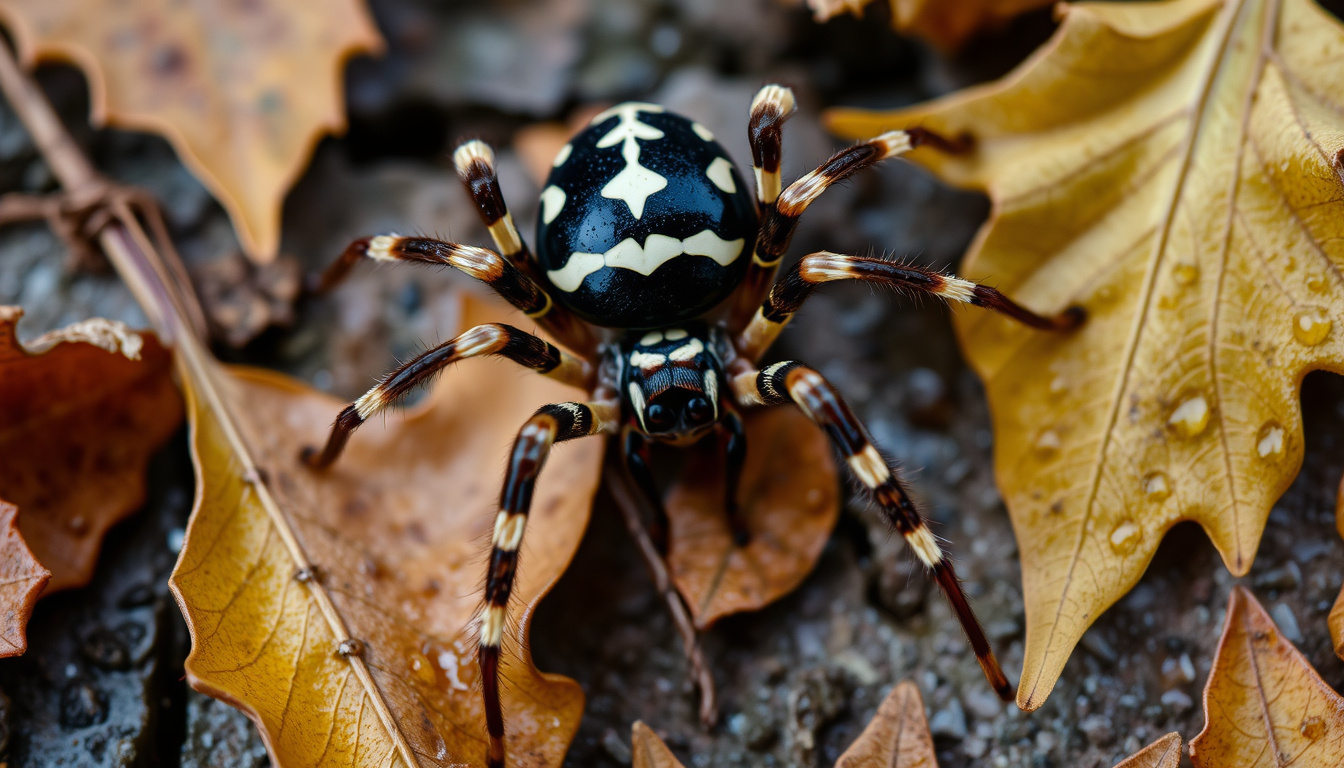

False widow spiders have become a familiar sight in homes across the United Kingdom, yet many people struggle to distinguish them from more dangerous relatives or harmless lookalikes. Understanding how to identify a false widow spider can help homeowners feel more at ease while recognizing the key differences that set these creatures apart.
The most common species, Steatoda nobilis—known as the noble false widow—arrived in Britain during the late nineteenth century and has since expanded its range considerably. Despite their somewhat intimidating appearance and connection to the black widow family, these spiders pose minimal risk to humans when left alone.
This guide provides practical identification features, comparison tools, and essential information for anyone wondering whether the spider in their home might be a false widow. From distinctive abdominal markings to leg structure and web characteristics, every detail matters when attempting accurate identification.
What Does a False Widow Spider Look Like?
The false widow spider belongs to the Steatoda genus, which includes six species found in the UK. The noble false widow (Steatoda nobilis) remains the most widespread and frequently encountered, though the rabbit hutch spider (S. bipunctata) and cupboard spider (S. grossa) also appear regularly in homes.
False widow spiders grow to roughly fingernail size, featuring a glossy bulbous abdomen that ranges from dark brown to purplish-black. Cream-colored skull-like or pentagonal markings on the back, combined with reddish-brown banded legs, help distinguish them from similar species.
- Females typically measure between 8 and 15 millimetres in body length, not including legs
- The abdomen appears shiny and rounded, with distinctive cream or pale markings that can resemble a skull or series of triangles
- Legs are relatively long and straight, often displaying orange or reddish-brown colouring with visible banding
- A narrow white band runs near the head region, providing another identifying feature
- Males tend to be smaller, measuring between 7 and 10 millimetres, with more pronounced markings
The markings that give these spiders their distinctive appearance can vary considerably between species and even between individual spiders. Females often display fainter patterns that may be barely visible, while males typically show clearer skull-like or chevron-shaped markings on their abdomens.
| Species | Female Size | Key Markings | Leg Colour |
|---|---|---|---|
| Steatoda nobilis (Noble) | 8.5–14 mm | Skull or pentagon shape, cream on dark background | Uniform red-brown |
| S. bipunctata (Rabbit Hutch) | 5–7 mm | Less distinct patterns | Brown |
| S. grossa (Cupboard) | Approximately 10 mm | Variable, generally smaller markings | Brown |
The webs constructed by false widow spiders appear irregular, messy, and somewhat tangled. These structures are typically positioned close to the ground or in corners, often near skirting boards, beneath furniture, or in less disturbed areas of garages and sheds. Egg sacs are secured within webbing in protected locations, usually positioned low to the floor.
Distinguishing Markings and Coloration
The most recognisable feature on a false widow spider involves the cream or pale markings adorning its abdomen. These patterns may take the form of a skull shape, a pentagon, or a series of chevrons arranged along the midline. The cephalothorax—the combined head and chest region—remains dark brown and contrasts sharply with the lighter abdominal markings.
Without magnification, these patterns can prove difficult to see, particularly on female specimens where the markings may be faint or entirely absent. Photographing suspected specimens from multiple angles often helps when seeking confirmation from identification resources or pest management professionals.
Size and Body Structure
When considering size, it helps to picture a female false widow spider as roughly matching the dimensions of an adult fingernail. The body remains compact and sturdy, with eight jointed legs extending outward. Males appear noticeably smaller and more slender, with proportionally longer legs relative to their body size.
The Steatoda nobilis female reaches 8.5 to 14 millimetres in body length, while males measure approximately 7 to 10 millimetres. These measurements exclude leg span, which can extend several centimetres further in both sexes.
How to Tell a False Widow from a Black Widow
Confusion between false widow spiders and their more dangerous relatives stems from similar colouring and body shapes. Black widow spiders (Latrodectus species) do occasionally appear in the UK, typically as accidental imports through imported goods, but established populations remain absent from the country.
The most reliable distinguishing feature involves the underside of the abdomen. Black widow spiders display a prominent bright red hourglass marking in this location—a trait entirely absent from false widow species. Additionally, black widows typically present a glossy, entirely black appearance, whereas false widows show brown or purplish tones with cream patterns.
Comparing Leg Structure and Body Shape
Both spider types share the bulbous, rounded abdomen characteristic of the Theridiidae family, but subtle differences persist. False widow legs tend toward orange or reddish-brown hues with visible banding, while black widow legs appear uniformly dark. The overall body shape of false widows feels somewhat less spherical and more elongated compared to the very round black widow abdomen.
Venom potency also differs significantly. The black widow possesses substantially more potent venom capable of causing severe systemic reactions, particularly in vulnerable individuals. False widow venom causes localised pain and swelling comparable to a wasp sting in most cases, with systemic symptoms remaining rare.
Distinguishing from Daddy Long Legs
Another common misidentification involves confusing false widow spiders with daddy long legs, which may refer to either harvestmen (Opiliones order) or cellar spiders (Pholcidae family). Both possess characteristically long, thin legs that appear disproportionately extended compared to their small bodies.
Unlike the sturdy, compact false widow, daddy long legs types feature extremely elongated limbs with a small body that seems almost attached as an afterthought. Harvestmen lack the bulbous abdomen entirely and possess a fused body segment, while cellar spiders maintain the bulbous shape but with far more delicate overall structure. Neither type poses any venom risk to humans.
Harmless native species such as Zygiella x-notata or Amaurobius spiders may superficially resemble false widows. When uncertain, photographing the specimen and consulting identification resources or pest control professionals helps confirm species without direct handling.
Are False Widow Spiders Dangerous?
False widow spiders generate considerable anxiety precisely because of their connection to the notorious black widow family. However, despite their intimidating appearance, these spiders prefer avoiding human contact entirely and only bite when directly provoked or accidentally trapped against skin.
The venom delivered through a bite produces effects far milder than those associated with true black widows. Most bites result in localized pain resembling a wasp sting, accompanied by mild swelling and redness around the bite site. These symptoms typically resolve within a few days without medical intervention.
Recognizing Bite Symptoms
Bite symptoms from false widow spiders generally manifest within minutes of the incident. Common responses include immediate pain at the bite location, followed by swelling and redness that may spread slightly beyond the immediate area. Some individuals report sensations similar to burning or itching.
More pronounced reactions, though uncommon, can involve nausea, muscle cramping, or general malaise lasting several hours. Infection at the bite site remains possible with any puncture wound and warrants monitoring. Medical attention should be sought if symptoms worsen significantly or persist beyond reasonable timeframes.
No confirmed deaths in the United Kingdom have resulted from false widow spider bites, according to established records. The Natural History Museum notes that while media coverage often emphasises potential danger, the actual public health threat remains minimal.
When Medical Attention Becomes Necessary
Most false widow bites resolve without complications, but certain symptoms warrant professional medical assessment. Difficulty breathing, significant muscle pain, chest tightness, or spreading infection around the bite site all merit prompt attention from healthcare providers.
Individuals with known spider venom allergies, compromised immune systems, or other health vulnerabilities should exercise particular caution. Contacting medical services for guidance when bite symptoms cause concern represents the sensible approach, even if professional treatment ultimately proves unnecessary.
Where Do False Widow Spiders Live?
False widow spiders gravitate toward warm, sheltered environments that offer protection from predators and weather extremes. Homes provide ideal habitats, with spiders commonly establishing presence in lofts, garages, sheds, attics, and the quieter corners of living spaces.
Indoor locations frequently include areas beneath furniture, behind radiators, within stored items, or in seldom-disturbed corners. The spiders construct their irregular webs in these protected zones, positioning egg sacs in locations safe from disturbance—typically low to the ground or tucked into cracks and crevices.
Seasonal Activity Patterns
False widow spiders remain active throughout the year when residing indoors, though peak sighting periods occur during autumn months when males actively search for mates. This seasonal increase in activity often leads to more frequent human encounters as spiders wander from their webs in search of partners.
Outdoor populations decline during winter but persist in protected microhabitats such as compost bins, garden sheds, or beneath garden furniture. Indoor environments may support active spiders year-round due to consistent temperatures and reduced predator pressure.
The Spread of False Widows Across the UK
The noble false widow spider first established itself in Britain during the 1870s, likely arriving as a stowaway through imported goods—possibly bananas or other produce shipped from the Canary Islands or Madeira. The first confirmed British record dates to 1879 in Torquay.
Populations concentrated initially in southern England before gradually spreading northward through subsequent decades. By the 1990s, established populations existed throughout southern regions, and the 2010s saw reports surge across broader geographic areas as awareness increased and the species continued its expansion.
False widow spiders now appear commonly throughout southern England and continue spreading into northern regions and parts of Wales and Scotland. Climate conditions and urban heat island effects may influence future distribution patterns.
The Rise of False Widow Spiders in Britain: A Timeline
Understanding when and how false widow spiders established themselves in the United Kingdom provides useful context for appreciating their current prevalence.
- 1879: First confirmed British record documented in Torquay, Devon, marking the species’ earliest known establishment on UK shores
- 1890s–1980s: Species maintains relatively limited distribution concentrated in southern coastal regions, with occasional reports from port cities
- 1990s: Notable expansion into south-central England observed, with populations becoming established in urban areas
- 2000s: Reports begin surfacing from areas beyond traditional southern strongholds, suggesting increased reproduction and dispersal
- 2010s: Surge in public awareness and media coverage coincides with peak sighting reports, particularly in southern England
- 2020s: Species now considered common throughout much of England, Wales, and parts of Scotland, with continued northward expansion
The Wildlife Trusts note that this gradual spread reflects both the species’ adaptability and increased public awareness leading to more frequent reporting of sightings.
What We Know for Certain—and What Remains Unclear
While false widow spider identification and basic behaviour patterns are well established through scientific observation, certain aspects continue generating discussion among researchers and pest management professionals.
False widow spiders genuinely lack the red hourglass marking characteristic of black widows. They produce venom capable of causing painful but typically mild reactions. They arrived in the UK during the 1870s and have spread progressively northward since that time.
| Well-Established Information | Aspects Requiring Further Study |
|---|---|
| Species identification features and appearance | Precise factors influencing regional spread rates |
| Lack of red hourglass marking differentiates from black widow | Variations in venom potency between individual spiders |
| Venom effects typically mild, resembling wasp stings | Long-term ecological impacts on native spider populations |
| Non-aggressive behaviour toward humans unless provoked | Climate change effects on future UK distribution |
| Invasive status confirmed since 1870s | Frequency of bites relative to reported sightings |
Bite severity appears to vary between individuals, though the precise factors governing this variation remain incompletely understood. Some scientific literature suggests that individual reaction differences, bite location, and the amount of venom injected may all contribute to variable outcomes.
The Ecological Context of False Widow Spiders
False widow spiders occupy an unusual ecological niche in Britain as relatively recent arrivals that have nonetheless established thriving populations across substantial geographic areas. Their success stems partly from adaptability to human-modified environments and partly from the absence of significant natural predators in domestic settings.
As an invasive species, Steatoda nobilis may influence native spider communities through competition for prey and habitat resources. Research continues examining whether this competitive pressure affects populations of other synanthropic spider species—those naturally adapted to living alongside humans.
The spiders themselves serve as predators of various small invertebrates, contributing to natural pest control within domestic environments. Their webs capture flies, moths, and other insects that might otherwise proliferate in kitchen or living areas, providing an unexpected benefit to householders willing to overlook their unsettling appearance.
Expert Perspectives on False Widow Spiders
Institutional expertise from established organisations informs our understanding of false widow spiders and their place in British wildlife.
Despite the fear they generate, false widow spiders present minimal risk to most people. They are not aggressive and will only bite if handled roughly or accidentally pressed against skin. The Natural History Museum’s position remains that no confirmed deaths have occurred in the UK from these spider bites.
— Natural History Museum, London
The Biological Records Centre maintains that while media attention has contributed to disproportionate concern, the actual danger posed by false widow spiders remains relatively modest compared to common perceptions.
Pest management professionals similarly note that identification accuracy matters significantly—many reported “false widow sightings” ultimately prove to involve harmless native species upon expert examination. This misidentification contributes to unnecessary anxiety and potentially excessive control measures.
Managing False Widow Encounters at Home
For homeowners preferring to minimise encounters with false widow spiders, several practical approaches exist. Regular vacuuming of corners, beneath furniture, and in less-frequented areas removes existing spiders, webs, and egg sacs while preventing population establishment.
Sealing cracks around windows, doors, and utility entry points reduces entry opportunities for wandering males during autumn mating season. Reducing outdoor lighting near entrances diminishes the attraction of insects that subsequently draw spider predators seeking prey.
When a spider is discovered in living areas, capturing it safely under a glass or container and releasing it outdoors provides humane removal without killing. Professional pest control services offer identification assistance and targeted treatment if populations prove problematic, though such intervention rarely becomes necessary for isolated sightings.
The expert advice resources available through agricultural and pest management organisations provide detailed guidance for those requiring specific control recommendations or identification support.
Summary
Identifying false widow spiders successfully relies on recognising a combination of features: the glossy bulbous abdomen ranging from dark brown to purplish-black, the distinctive cream skull-like or pentagonal markings (though these may be faint or absent on females), and the reddish-brown banded legs. The absence of a red hourglass marking distinguishes these spiders from true black widows, while their sturdier build separates them from delicate daddy long legs types.
These spiders have inhabited Britain since the late 1870s and now appear throughout much of the country, thriving in warm sheltered spots within homes and other buildings. While their bites can prove painful, serious complications remain rare and deaths have not been confirmed in UK records. Maintaining awareness through proper identification rather than assuming the worst helps homeowners respond appropriately when these eight-legged neighbours appear. For those concerned about similar household pests, information about flea treatment for dogs and other domestic pest concerns may prove useful.
Frequently Asked Questions
What exactly is the noble false widow spider?
The noble false widow (Steatoda nobilis) represents the most common and widespread false widow species found in British homes. It belongs to the Steatoda genus, which contains six UK species, and arrived in Britain during the 1870s.
How can I identify false widow spider eggs?
False widow egg sacs appear white and silk-like, secured within webbing in protected locations. These sacs measure roughly 5–10 millimetres and contain numerous eggs. The sacs are typically positioned low to the ground or in undisturbed corners.
When do false widow spiders appear most frequently in the UK?
Peak sightings occur during autumn months when males actively search for mates. However, indoor populations remain active throughout the year due to consistent indoor temperatures and protection from weather conditions.
How venomous is a false widow spider compared to a wasp?
False widow venom causes effects generally comparable to a wasp sting—localised pain, swelling, and redness. True black widow venom proves substantially more potent, but black widows have not established populations in the UK.
Can false widow spiders bite through clothing?
Bites typically occur when spiders become trapped against skin, such as when putting on clothing or rolling onto a spider in bed. Thicker fabrics generally provide sufficient protection to prevent bites in most circumstances.
Do false widow spiders live in gardens?
While primarily associated with indoor habitats, false widow spiders may also establish in garden structures such as sheds, compost bins, or beneath garden furniture during warmer months.
Are false widow populations still expanding in the UK?
Current evidence suggests continued northward expansion from established southern populations. Climate conditions and urban heat effects may influence future distribution patterns across the country.
Related stories





Thomas Grant covers Westminster, councils, policy and government affairs across the UK.