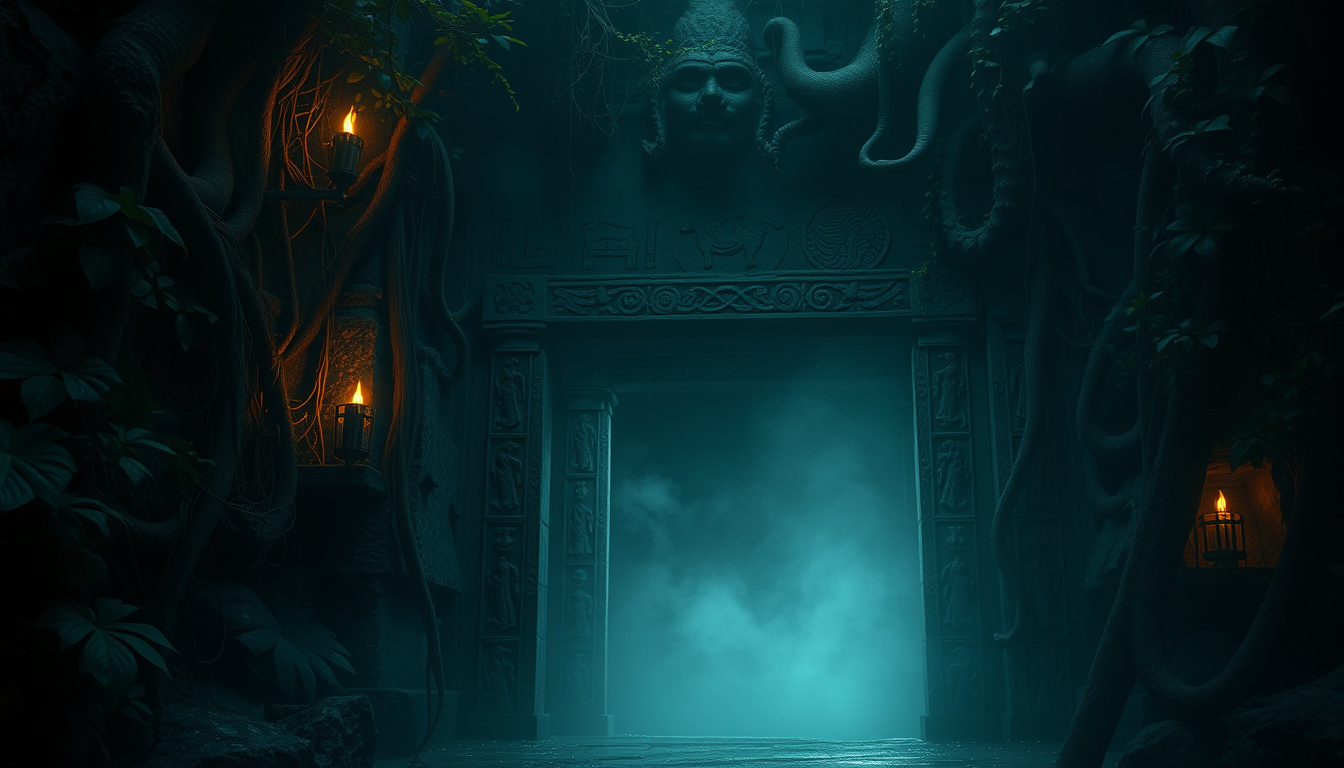

Shadow of the Tomb Raider is the concluding chapter of Lara Croft’s origin story in the Survivor Trilogy—and it’s the densest, most atmospheric entry yet. Here’s how it stacks up against Rise of the Tomb Raider so you can decide where to put your next $20–$60.
Developer: Eidos-Montréal · Publisher: Square Enix · Release Year: 2018 · Platforms: PC, PS4, Xbox One · Sequel To: Rise of the Tomb Raider
Quick snapshot
- Sequel to Rise of the Tomb Raider (Metacritic)
- Third and final game in the Survivor Trilogy (GamingBible)
- Definitive Edition includes all DLC (Metacritic)
- Exact Metacritic critic score for Shadow without visiting the page
- Whether future Tomb Raider games will continue Lara’s origin arc or branch elsewhere
- Post-2023 patches or remaster impacts on performance
- Survivor Trilogy (2013, 2015, 2018) sits first in the unified Tomb Raider timeline
- Tomb Raider: Legacy of Atlantis remake slated for 2026
- Tomb Raider: Catalyst scheduled for 2027, set after Underworld
- New live-action Tomb Raider series announced for 2026
- Legacy of Atlantis remake follows Shadow chronologically
- Crystal Dynamics continues as primary developer
| Attribute | Value |
|---|---|
| Developer | Eidos-Montréal |
| Publisher | Square Enix |
| Release Date | 2018 |
| Genre | Action-adventure |
| Platforms | PC, PlayStation 4, Xbox One |
| Trilogy Position | Third (finale) |
| Games in Series | 3 (Survivor Trilogy) |
Is Shadow of the Tomb Raider the last game?
Shadow of the Tomb Raider concludes Lara Croft’s origin story that began with Tomb Raider in 2013, but the franchise itself is far from finished. The Survivor Trilogy—spanning three games released across five years—forms the opening chapter in a unified timeline that stretches decades into the future. According to GamingBible’s timeline breakdown, the series will continue with two notable releases ahead.
Current status in the series
Shadow is technically the last game in the Survivor Trilogy, which also includes the 2013 Tomb Raider and Rise of the Tomb Raider (2015). Crystal Dynamics developed all three entries, building a cohesive narrative arc for Lara that transforms her from a shipwreck survivor into a seasoned archaeologist. The trilogy was positioned as the beginning of a new era for the franchise, and its critical reception proved the formula worked—the series earned comparisons to Naughty Dog’s Uncharted games while carving out its own identity.
- The 2013 Tomb Raider launched in February 2013, rebooting the franchise for a modern audience
- Rise of the Tomb Raider followed in November 2015, expanding on exploration and survival mechanics
- Shadow of the Tomb Raider arrived in September 2018, pushing jungle environments and tomb density further
Future Tomb Raider projects
Looking beyond Shadow, Crystal Dynamics has outlined an ambitious roadmap. Tomb Raider: Legacy of Atlantis—a remake of the 2014 mobile game—is scheduled for 2026, placing it after Shadow in the unified timeline. Game Informer reported that Tomb Raider: Catalyst will follow in 2027, set years after Underworld and positioned as a direct sequel to that 2008 entry. A new live-action Tomb Raider series was also announced for 2026, suggesting cross-media expansion alongside new games.
Is Shadow of the Tomb Raider a good game?
Shadow of the Tomb Raider received strong marks from critics, with many calling it the best entry in the Survivor Trilogy. The game refines the formula established by its predecessors while delivering denser jungle environments and more challenging tombs than either prior game. User reviews tell a slightly more nuanced story, with praise for graphics and narrative but some fatigue from gameplay similarities to Rise.
Metacritic reviews
Metacritic’s critic aggregate shows Shadow landed firmly in “great” territory, though the exact score varies slightly by platform. Rise of the Tomb Raider earned an 89 critic score on Xbox One, a benchmark Shadow appears to have matched or approached closely. Metacritic’s review compilation highlights consistent praise for visual presentation, atmosphere, and tomb design—areas where Shadow pushes furthest ahead of its predecessor.
- Critics frequently cite Shadow’s “terrifying tombs” as a standout improvement over Rise
- The PlayStation Blog retrospective in 2025 highlighted both Rise and Shadow as highlights of the Survivor era
- Graphics comparisons show incremental but noticeable improvements in lighting, shadows, and water effects
Player opinions on Reddit
Community sentiment splits along predictable lines. Metacritic’s user reviews capture the divide: players who prioritize story atmosphere and scares lean toward Shadow, while those who value technical performance and gameplay variety often prefer Rise. One recurring observation is that Shadow doesn’t reinvent the wheel—it refines and polishes what worked in Rise rather than introducing major mechanical shifts.
Which is better, Rise of the Tomb Raider or Shadow of the Tomb Raider?
This is the question most prospective buyers ask, and the honest answer depends on what you value most. Rise and Shadow share 80% of their DNA—both feature survival mechanics, puzzle tombs, combat sequences, and Lara’s ongoing origin story—but they emphasize different strengths. Comparing them requires weighing graphics improvements against gameplay familiarity.
Gameplay differences
Rise of the Tomb Raider leans into exploration and the satisfaction of uncovering secrets across varied environments, from Syrian caves to Arctic base camps. Shadow of the Tomb Raider shifts focus toward denser jungle traversal and more punishing tombs that test player skill more directly. Graphics comparison footage highlights that Shadow implements Temporal Anti-Aliasing (TAA) where Rise used SMAA, resulting in cleaner images with reduced artifacting. Water effects and ripple simulations also improve noticeably, supporting enhanced underwater gameplay sections.
- Shadow’s TAA produces smoother edges on narrow environmental objects compared to Rise’s SMAA
- Dynamic shadows and light-reacting objects give Shadow more believable environmental lighting
- Performance remains more stable in Shadow even in demanding hub areas like the Geothermal Valley
- Rise is considered by some users the better game “on a technical scale” per forum discussions
Story and exploration
Rise of the Tomb Raider tells a more personal story about Lara confronting her past and proving herself to the world—a narrative arc critics called “savored” compared to the over-the-top 2013 reboot. Shadow shifts tone toward cultural appropriation themes and supernatural threats, with more horror-influenced tomb sequences. Metacritic’s review consensus notes Shadow refines jungle survival and underwater mechanics beyond what Rise attempted, though the core loop remains recognizable.
Definitive Edition features
If you’re buying new, the Definitive Edition matters significantly. Both Rise and Shadow have definitive or anniversary editions that bundle all DLC. The Rise of the Tomb Raider: 20 Year Celebration edition was praised as a “perfect Lara Croft game” with modern twists on the formula. Shadow’s Definitive Edition similarly includes all downloadable content, making it the complete package at a moderate price premium over the base game.
Rise offers a more varied world and arguably tighter narrative pacing. Shadow delivers better graphics and denser tomb design. If you’ve already played Rise and want more of the same (with upgrades), Shadow delivers. If narrative variety matters more than visual polish, Rise still holds up well.
| Aspect | Rise of the Tomb Raider | Shadow of the Tomb Raider |
|---|---|---|
| Release Year | 2015 | 2018 |
| Metacritic Score | 89 (Xbox One) | Strong (platform varies) |
| Anti-Aliasing | SMAA | TAA |
| Environment Focus | Caves, Arctic, varied | Jungles, tombs, dense |
| Performance Stability | Occasional slowdowns | More consistent |
| Narrative Tone | Personal proof, survival | Cultural, supernatural |
Buyers prioritize Rise for its varied environments and narrative pacing, while Shadow appeals to those who value graphical fidelity and challenging tomb design—each represents a distinct evolution of the franchise’s action-adventure formula.
Is Shadow of the Tomb Raider a full game?
Shadow of the Tomb Raider is a complete 15–20 hour campaign with substantial side content, making it unmistakably a full retail release. The game includes all base campaign missions, optional tombs, challenge tombs, and side quests—there’s no shortage of content for completionists. The Definitive Edition adds another layer of content through DLC expansions, but even the base game stands on its own as a substantial experience.
Content length
Average playthroughs for the main story run 15–18 hours, with completionist runs extending to 30–40 hours when including all tombs, side missions, and collectibles. This places Shadow squarely in line with Rise of the Tomb Raider, which similarly offers 15–20 hours for a main run. Both games exceed typical AAA campaign lengths, and neither suffers from the padding or repetitive side quests that plague some open-world titles.
- Main story: 15–20 hours
- Completionist: 30–40 hours
- Optional tombs: 7–9 major tombs plus challenge tombs
- Side missions: 15–20 collectible-driven quests
Definitive Edition vs base
The base game alone is worth the price for most buyers, but the Definitive Edition ($30–40 vs $20–30 base) bundles seven DLC expansions including new tombs, outfits, and weapons. Metacritic reviews note the DLC ranges from worthwhile to forgettable, with the best expansions adding genuinely new tombs rather than reskinned content. If you plan to replay or explore thoroughly, the Definitive Edition represents better value; casual players can comfortably start with the base version.
Steam and console storefronts frequently discount the Definitive Edition during seasonal sales, sometimes dropping it to $10–15. Base editions go even lower. If you’re patient, waiting for a 50%+ discount often nets you the complete package for less than the original base price.
Does it matter if I play the Tomb Raider games before Shadow?
Playing the Survivor Trilogy in order is strongly recommended, though Shadow does technically function as a standalone narrative in a pinch. The game references events from both prior entries, and Lara’s character development tracks across all three games. Jumping directly to Shadow means missing context that enriches key moments—particularly the relationship dynamics and Lara’s evolving moral compass.
Recommended play order
The optimal order is chronological: Tomb Raider (2013) → Rise of the Tomb Raider (2015) → Shadow of the Tomb Raider (2018). This progression lets Lara’s growth feel natural rather than forced. GamingBible’s timeline analysis confirms the Survivor Trilogy forms the first segment of the unified Tomb Raider chronology, with each game building directly on its predecessor’s narrative threads.
- Tomb Raider (2013): Lara’s origin, survival-focused reboot
- Rise of the Tomb Raider (2015): Proving herself, wider world exploration
- Shadow of the Tomb Raider (2018): Concluding arc, cultural stakes
Story continuity
Shadow opens with direct callbacks to Rise’s finale, and several supporting characters carry over between games. Without playing Rise first, players miss the weight of these connections—Lara’s relationships feel shallower, and her occasional moral wavering lacks context. The story isn’t incomprehensible without prior knowledge, but it loses emotional resonance.
| Specification | Minimum (PC) | Recommended (PC) |
|---|---|---|
| OS | Windows 7/8/10 (64-bit) | Windows 10 (64-bit) |
| Processor | Intel Core i3-2100 / AMD equivalent | Intel Core i7-3770 / AMD Ryzen 7 2700X |
| Memory | 8 GB RAM | 8 GB RAM |
| Graphics Card | NVIDIA GTX 660 / AMD Radeon HD 7870 | NVIDIA GTX 1060 6GB / AMD Radeon RX 480 8GB |
| Storage | 40 GB available space | 40 GB available space |
| DirectX | Version 11 | Version 12 |
The system requirements table shows Shadow of the Tomb Raider remains accessible on mid-range hardware from nearly a decade ago, with the recommended specs asking for relatively modest GPU upgrades over the minimum.
Upsides
- Improved TAA and lighting over Rise
- Denser jungle environments and challenging tombs
- Complete 15–20 hour campaign with substantial side content
- Definitive Edition bundles all DLC
- Strong critical reception and narrative closure for Lara’s origin
- More stable performance than Rise in demanding areas
Downsides
- Gameplay feels too similar to Rise for some players
- Graphics improvements are incremental rather than groundbreaking
- Some DLC expansions are forgettable reskins
- Story callbacks lose impact if played out of order
- No major mechanical innovation over predecessor
- Requires DLC purchases for complete content unless buying Definitive
“Shadow of the Tomb Raider is the best game in this trilogy and was well worth the wait.”
— Metacritic Critic Review
“Perfect Lara Croft game. Echoes of the original, but with a modern twist.”
— Metacritic User Review (Rise 20 Year Celebration)
“From a timeline perspective, Tomb Raider: Catalyst is set years after the events of Tomb Raider: Underworld.”
— Will Kerslake (Game Director)
Related reading: Nintendo Switch 2 Games List · Sonic the Hedgehog 2
youtube.com, metacritic.com, metacritic.com, youtube.com, youtube.com, blog.playstation.com, metacritic.com, youtube.com
Shadow of the Tomb Raider caps Lara Croft’s origin trilogy with refined gameplay, where Definitive Edition essentials reveal added DLC and enhancements over Rise.
Frequently asked questions
What are Shadow of the Tomb Raider system requirements?
PC minimum specs include an Intel Core i3-2100 or AMD equivalent, 8 GB RAM, an NVIDIA GTX 660 or AMD Radeon HD 7870, and 40 GB storage. Recommended specs call for an Intel Core i7-3770 or AMD Ryzen 7 2700X with an NVIDIA GTX 1060 6GB or AMD Radeon RX 480 8GB. The game supports DirectX 11 at minimum and DirectX 12 at recommended settings.
When was Shadow of the Tomb Raider released?
Shadow of the Tomb Raider launched on September 14, 2018, for PC, PlayStation 4, and Xbox One. This placed it three years after Rise of the Tomb Raider and five years after the 2013 reboot that started the Survivor Trilogy.
What is the Shadow of the Tomb Raider price?
Base game prices typically range from $20–40 depending on platform and sales. The Definitive Edition costs $30–50 at full price but frequently discounts to $10–15 during seasonal sales. Console and Steam seasonal promotions regularly offer 50–75% off both editions.
Is there a Shadow of the Tomb Raider movie?
No direct movie adaptation exists for Shadow of the Tomb Raider, but a new live-action Tomb Raider series was announced for 2026. The series is expected to draw from the broader franchise including Survivor Trilogy elements, though specific plot details haven’t been confirmed.
What is the Shadow of the Tomb Raider gameplay like?
Shadow combines third-person action with survival mechanics, puzzle solving, and stealth-based combat. The game introduces denser jungle traversal, advanced climbing mechanics, and “terrifying tombs” with deadly puzzles. Underwater sections feature improved water physics compared to Rise. Combat allows stealth approaches or direct confrontations with varied enemy types.
Where can I find Shadow of the Tomb Raider walkthrough?
Major walkthroughs are available on YouTube channels like gaming comparison channels, IGN, and GameSpot. Steam Community guides and dedicated Tomb Raider wikis offer written walkthroughs with optional tomb solutions. The Definitive Edition includes a photo mode that some players use to document their journeys.
What is the best Tomb Raider game overall?
Among Survivor Trilogy entries, critics frequently cite Shadow as the best for atmosphere and tomb design while Rise earns praise for narrative balance and varied environments. The 2013 Tomb Raider remains beloved for its intense survival focus. For the broader franchise, Tomb Raider: Underworld (2008) and the classic PS1 era games each have passionate defenders. The answer largely depends on whether you prioritize modern graphics and mechanics or classic gameplay feel.
For fans who played Rise and want more of that formula with visual upgrades, Shadow delivers exactly that—dense jungles, challenging tombs, and a satisfying conclusion to Lara’s origin story. For players who found Rise too familiar to the 2013 reboot, Shadow’s incremental improvements might not justify a full-price purchase, especially given frequent discounts on both the base game and Definitive Edition. The franchise’s future looks active through 2027, meaning there’s no shortage of Tomb Raider content ahead.
Related stories





Sophie Lane covers culture, lifestyle and society for Media Grid UK.