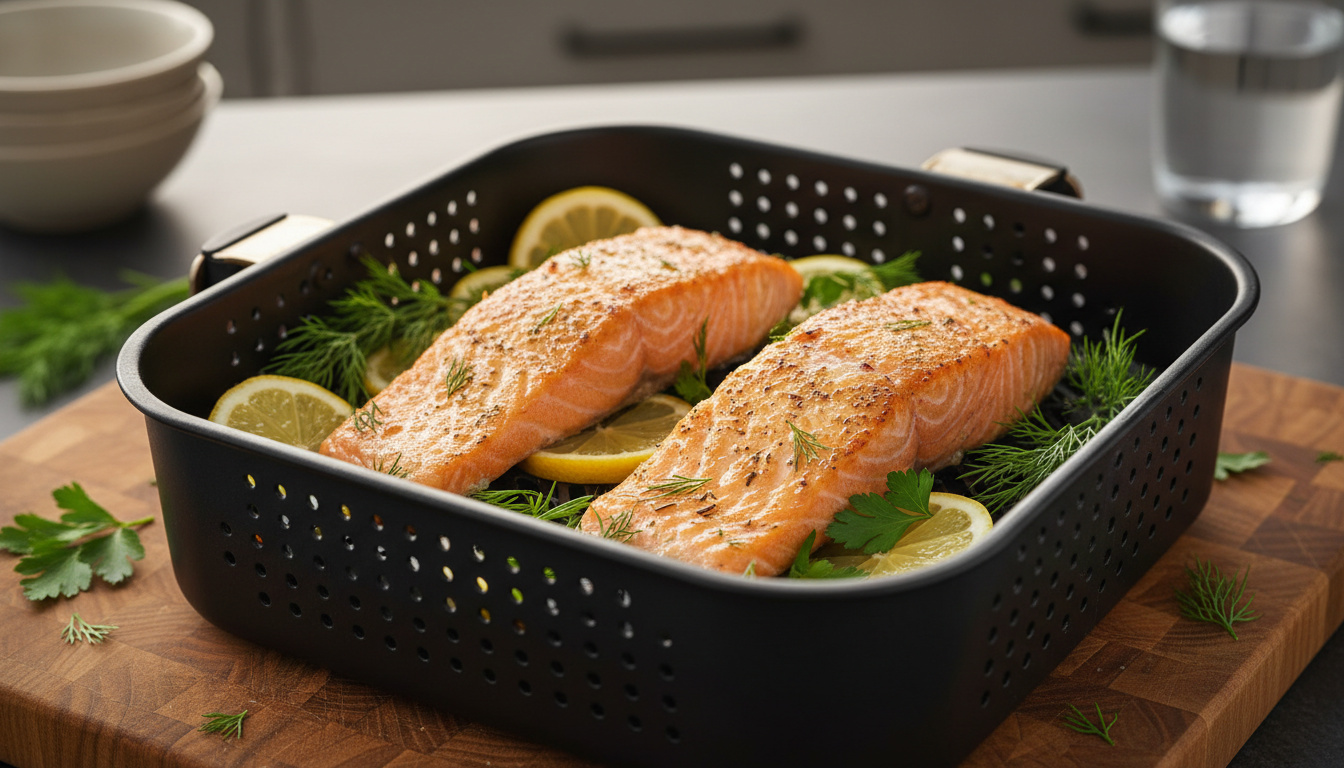

Cooking salmon in an air fryer produces consistently moist fillets with crisped exteriors in roughly ten minutes, offering a practical alternative to oven roasting or pan-searing for weeknight dinners. The circulating hot air renders the skin beautifully while cooking the flesh evenly without the mess of stovetop splatter.
Home cooks increasingly prefer this method for its speed and reliability. Fresh or frozen fillets adapt well to the high-heat environment, requiring minimal oil to achieve restaurant-quality texture.
Success depends primarily on precise timing relative to thickness and maintaining proper internal temperature for food safety. Understanding these variables ensures juicy results rather than overcooked, dry fish.
How Long and at What Temperature to Cook Salmon in Air Fryer?
| Time Required 7-12 minutes |
Temperature 400°F (204°C) |
Flipping Not necessary |
Yield 2-4 fillets |
Standard preparation calls for 400°F heat for 7-11 minutes for fresh fillets, though frozen fish requires modified timing. Thinner tail pieces may finish in 6-8 minutes, while thick center cuts demand 10-12 minutes.
- Pat fillets completely dry before seasoning to ensure skin crisping
- Standard temperature is 400°F for fresh fillets, 390°F for frozen starts
- Check internal temperature at the thickest point after 7 minutes
- Remove from heat at 135°F to allow carryover cooking to 145°F
- Rest cooked salmon for 5 minutes before serving to retain moisture
- Cook in single layers without overlapping for even air circulation
- Adjust timing based on precise thickness measurements
Thickness-based timing provides more reliable results than weight alone, as density varies by cut. Always verify doneness with an instant-read thermometer rather than relying solely on time.
| Thickness | Fresh Time at 400°F | Frozen Time (post-thaw) | Notes |
|---|---|---|---|
| <1 inch (thin/tail) | 6-8 minutes | 6-8 minutes | Check early; dries quickly |
| 1 inch (standard) | 8-10 minutes | 7-9 minutes | Most common fillet size |
| >1 inch (thick/center) | 10-12 minutes | 9-11 minutes | Use thermometer; add 1-2 min per extra ½ inch |
| Cubed (small pieces) | 7-8 minutes | N/A | Spread evenly for crisping |
Do You Need to Flip Salmon in the Air Fryer and Use Foil?
The No-Flip Technique
Placing fillets skin-side down directly in the basket allows the circulating air to cook the top and sides evenly without disturbing the skin. Testing shows that flipping risks tearing the delicate skin and disrupting the cooking surface. The convection current eliminates hot spots, making manual turning unnecessary.
Foil and Preheating Considerations
Lining the basket with aluminum foil simplifies cleanup but requires leaving the top exposed to maintain airflow. Preheating recommendations vary by model, though most perform well when brought to temperature before adding fish. Fully wrapping fillets traps steam and prevents the desired crisping effect.
Create a shallow tray shape with foil that allows air to circulate around the salmon while catching drips. Avoid covering the top surface entirely, as this prevents the Maillard reaction that creates golden, crispy skin.
Best Seasonings and Prep Tips for Air Fryer Salmon
Basic Seasoning
A light coating of olive oil, salt, and black pepper applied to the flesh side provides sufficient flavor without overwhelming the fish. Mediterranean-inspired preparations often add lemon juice and garlic powder for brightness. Apply seasonings to all sides except the skin to prevent burning while maintaining flavor.
Marinades and Glazes
Whisking olive oil with Dijon mustard, brown sugar, soy sauce, and ginger creates a caramelized glaze. Sweet-savory combinations work well at high heat, though sugary glazes benefit from starting at 350°F to prevent burning. Tajín, paprika, and thyme create alternative flavor profiles without added sugars.
Apply oil and spices immediately before cooking for fresh fillets. For frozen salmon, brush with oil and seasonings after the initial 7-minute thaw cycle to ensure proper adhesion and flavor penetration.
How to Cook Frozen Salmon and Get Crispy Skin in Air Fryer
From Frozen to Finished
Frozen fillets cook successfully without defrosting. Preheat to 390°F, place frozen salmon skin-side down, and cook for 7 minutes to thaw. Brush with oil and seasonings, then continue cooking for 6-9 minutes until reaching 145°F internal temperature. This approach yields results comparable to fresh without the planning overhead of overnight thawing.
Achieving Crispy Skin
Crispy skin requires dry surfaces and high heat. Patting the fillet thoroughly before cooking removes moisture that prevents crisping. High-heat techniques produce golden exteriors when the skin remains exposed to direct air circulation. The natural fat in the skin renders quickly at 400°F, creating a textural contrast with the tender flesh.
Preventing Dry Results
Overcooking presents the primary risk for dryness. Checking temperature every 1-2 minutes after the 7-minute mark prevents overshooting the target. Thicker cuts retain moisture better than thin tail sections, which require vigilant monitoring.
While chefs sometimes prefer medium-rare salmon at 125°F for texture, FDA guidelines recommend 145°F internal temperature to eliminate potential parasites and bacteria. Pregnant or immunocompromised individuals should strictly adhere to the higher threshold. 4 Weeks Pregnant Symptoms – Signs, What’s Normal and Warnings provides additional health context for those monitoring dietary safety during early pregnancy.
Step-by-Step Cooking Sequence
- Preparation: Pat fillets dry with paper towels; brush flesh side with olive oil and seasonings of choice.
- Preheating: Heat air fryer to 400°F (390°F if cooking from frozen) for 3-5 minutes.
- Arrangement: Place skin-side down in basket without overlapping; add foil tray underneath if desired for easier cleaning.
- Initial Cook: Cook fresh fillets 7 minutes (frozen: 7 minutes to thaw, then season and continue).
- Checking: Verify internal temperature at thickest point using instant-read thermometer; add 1-2 minutes if needed.
- Resting: Remove at 135-140°F; rest 5 minutes on plate to reach final 145°F through carryover cooking.
What Variables Affect Cooking Certainty?
| Established Guidelines | Variables Requiring Adjustment |
|---|---|
| Safe internal temperature: 145°F per FDA | Air fryer wattage and fan speed vary by brand and model |
| Standard temp: 400°F for fresh salmon | Exact minutes differ based on fillet shape and starting temperature |
| Skin-side down placement prevents sticking | Altitude and ambient kitchen temperature affect cooking speed |
| Resting period: 5 minutes post-cook | Glazes with sugar require reduced starting temperature (350°F) |
Why Air Fryer Method Excels for Salmon
The convection mechanism circulates superheated air around the entire fillet, eliminating the need for flipping while creating Maillard reaction browning on the skin. This produces textures comparable to pan-searing with significantly less oil, reducing overall calorie content while maintaining nutritional integrity.
Compared to oven baking, the compact chamber heats rapidly, reducing total cooking time by roughly 40 percent while maintaining moisture. Batch testing confirms the method accommodates multiple fillets efficiently when arranged in single layers. Precise measurements matter in culinary execution, much like understanding exact conversions in other contexts, such as knowing that 75 kg in Stone – Exact Conversion to 11 Stone 11 Pounds requires specific calculation accuracy.
Safety Standards and Source Attribution
FDA guidelines specify cooking fish to 145°F internal temperature to ensure safety, particularly for vulnerable populations including pregnant women and those with compromised immune systems.
Multiple culinary specialists confirm that while medium-rare salmon (125°F) offers preferred texture for some palates, the 145°F standard eliminates risks associated with parasites and bacterial contamination. USDA handling recommendations emphasize purchasing from reputable sources and avoiding cross-contamination during preparation. Store leftovers within two hours of cooking and reheat to 165°F internal temperature.
Key Takeaways for Perfect Results
Air fryer salmon delivers reliable results at 400°F for 7-12 minutes depending on thickness, requiring no flipping when cooked skin-side down. Frozen fillets adapt well using a two-stage approach. Maintaining awareness of internal temperature rather than relying solely on time ensures both safety and juiciness. Pair with roasted vegetables or fresh salads for complete meals.
Common Questions
Can you cook frozen salmon without thawing first?
Yes. Cook frozen fillets at 390°F for 7 minutes to thaw, brush with oil and seasonings, then continue cooking 6-9 minutes until reaching 145°F internal temperature.
Why does my air fryer salmon dry out?
Overcooking causes dryness. Check temperature early after 7 minutes, remove at 135°F to rest, and ensure you account for fillet thickness variations.
Is it safe to eat air fryer salmon at medium-rare temperatures?
While some prefer 125°F for texture, FDA recommends 145°F to kill parasites and bacteria. Higher temperatures are essential for pregnant or immunocompromised individuals.
What oil works best for air fryer salmon?
Olive oil provides excellent flavor and moisture retention. Avocado oil works well for higher smoke points, while cooking spray offers convenience for light coating.
Can I cook multiple fillets simultaneously?
Yes, provided they sit in a single layer without overlapping. Most standard baskets accommodate 2-4 fillets; cook in batches if necessary to maintain air circulation.
How do I store and reheat leftovers?
Refrigerate within two hours and consume within 3-4 days. Reheat at 380°F for 3-4 minutes until warmed through, or enjoy cold in salads.
Related stories




Thomas Grant covers Westminster, councils, policy and government affairs across the UK.