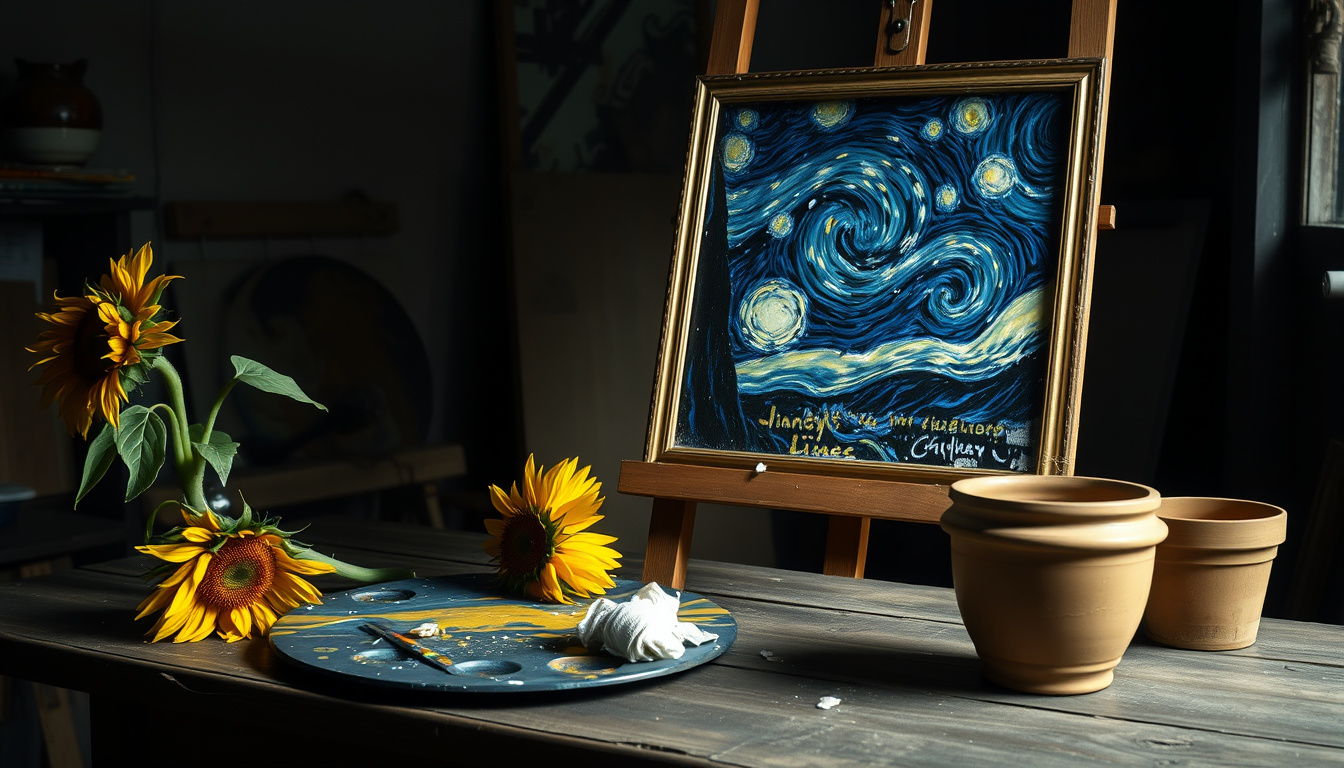
You’ve probably seen his sunflowers in a thousand forms—on coffee mugs, dorm posters, phone cases. But the man behind those thick, swirling brushstrokes lived a story stranger than any painting. Vincent van Gogh sold just one canvas in his lifetime, yet his name now echoes through every corner of modern art. Here is what the historical record actually says about the ear, the suicide, the love affairs, and the posthumous fame that turned a struggling Dutchman into a global icon.
Born: 30 March 1853, Zundert, Netherlands ·
Died: 29 July 1890, Auvers-sur-Oise, France ·
Nationality: Dutch ·
Paintings produced: Over 900 ·
Years active: 1880–1890 (10 years) ·
Famous works: Starry Night, Sunflowers, The Bedroom
Quick snapshot
- Van Gogh cut off part of his left ear on 23 December 1888 in Arles (Van Gogh Museum).
- He gave the wrapped ear to a woman at a brothel; some accounts identify her as a prostitute named Rachel (Van Gogh Museum).
- Van Gogh shot himself in a wheat field in Auvers-sur-Oise on 27 July 1890 and died two days later (Wikipedia).
- He sold only one painting during his lifetime: The Red Vineyard (Van Gogh Museum).
- Whether he cut off the entire ear or just the lobe (University of California, Berkeley Library).
- The exact reason for the ear incident — possible dispute with Gauguin or news of his brother’s engagement (Britannica).
- The precise wording of his last words — “The sadness will last forever” is widely cited but not definitively documented (Wikipedia).
- Brother Theo — his lifelong financial and emotional supporter (Van Gogh Museum).
- Paul Gauguin — fellow artist; their turbulent stay in Arles preceded the ear incident (Britannica).
- Johanna van Gogh-Bonger — Theo’s widow who championed Vincent’s work after his death (Van Gogh Museum).
- Over 900 paintings and 1,100 works on paper in 10 years (Van Gogh Museum).
- Painted more than 30 self-portraits (Courtauld Institute of Art).
- Most expensive painting sold for $82.5 million (Portrait of Dr. Gachet) (Wikipedia).
| Full name | Vincent Willem van Gogh |
|---|---|
| Born | 30 March 1853, Zundert, Netherlands |
| Died | 29 July 1890, Auvers-sur-Oise, France |
| Nationality | Dutch |
| Movement | Post-Impressionism |
| Number of paintings | Over 900 |
| Famous works | Starry Night (1889), Sunflowers (1888), The Bedroom (1888) |
| Cause of death | Suicide by gunshot |
Why did Van Gogh cut off his ear and who did he give it?
What led to the ear mutilation?
On 23 December 1888, in the southern French city of Arles, Vincent van Gogh cut off part of his left ear. The act followed a heated conflict with Paul Gauguin, with whom he had been living and working (Britannica). Van Gogh was under severe emotional strain; the relationship had soured, and Gauguin was planning to leave. Some scholars also suggest Van Gogh may have learned of his brother Theo’s engagement, which added to his distress.
After the incident, police found Van Gogh at home and took him to hospital (Van Gogh Museum). He later could recall nothing about what happened and wanted to forget the episode. In January 1889, after leaving hospital, he painted Self-Portrait with Bandaged Ear, which shows the bandaged right ear because he painted himself in a mirror (Courtauld Institute of Art).
Who received Van Gogh’s ear?
According to the Van Gogh Museum, Van Gogh wrapped the ear in paper and presented it to a prostitute at a local brothel. Britannica also reports that he delivered it to a woman at a nearby brothel, saying it should be guarded carefully. Some accounts name the recipient as Rachel, though a Berkeley summary notes that the recipient was likely a cleaner rather than a prostitute (University of California, Berkeley Library).
“Van Gogh could later recall nothing about what happened and wanted to forget the episode.” — Van Gogh Museum
The implication: even the most famous detail about Van Gogh — that he gave his ear to a prostitute — has multiple versions in the historical record, and scholars disagree on the recipient’s identity.
Was Gauguin involved?
Paul Gauguin was present in Arles during the ear incident. Britannica states the event occurred after a heated conflict during their stay together. The Van Gogh Museum confirms that the ear incident happened during a period of severe emotional strain and a breakdown in his relationship with Gauguin (Van Gogh Museum). However, no definitive evidence shows Gauguin directly caused the act.
Where did Van Gogh shoot himself?
What happened after the shooting?
On 27 July 1890, Van Gogh shot himself in the chest in a wheat field in Auvers-sur-Oise, France (Wikipedia). He managed to walk back to his inn, where a doctor was called. He died two days later, on 29 July 1890, with his brother Theo at his bedside (Wikipedia). Theo reported that Vincent’s last words were, “The sadness will last forever” (Wikipedia).
“La tristesse durera toujours.” — Reported last words of Vincent van Gogh, attributed to Theo van Gogh
The pattern: even Van Gogh’s final utterance is a matter of historical debate. The exact wording and language — French, Dutch, or something else — are not definitively documented, though the French version is most commonly cited.
What were Van Gogh’s last words?
The phrase is usually given in French as “La tristesse durera toujours” (Wikipedia). Theo van Gogh is the source most often cited for the deathbed phrase. However, the precise wording is uncertain, as multiple accounts exist. What is consistent is that Van Gogh’s final expressed sentiment was one of enduring sadness.
Why is Van Gogh so famous?
How many paintings did he create?
Van Gogh produced over 900 paintings and 1,100 works on paper in just 10 years (Van Gogh Museum). He sold only one painting during his lifetime: The Red Vineyard (Van Gogh Museum).
When did his fame begin?
Van Gogh was not broadly famous during his lifetime (Van Gogh Museum). His reputation grew rapidly after his death, boosted by exhibitions and the tireless efforts of his sister-in-law Johanna van Gogh-Bonger. She promoted his work, organized exhibitions, and published his letters to Theo. By the early 20th century, his influence had spread across Europe, impacting Expressionism and Fauvism.
What makes his style unique?
His expressive use of color, thick brushstrokes (impasto), and emotional intensity are hallmarks of Post-Impressionism. Works like Starry Night (1889), Sunflowers (1888), and The Bedroom (1888) are globally recognized. The catch: his fame is inseparable from his tragic biography — the ear incident, mental illness, and early death created a narrative that amplifies interest in his art.
Did Van Gogh ever fall in love?
Who did Van Gogh love?
Van Gogh proposed to his widowed cousin Kee Vos-Stricker, but she refused. He later lived with Sien Hoornik, a pregnant prostitute, for a time, but the relationship ended. In the final years of his life, he had a brief relationship with Margot Begemann, who attempted suicide after they separated (Wikipedia). He never married and had no known children.
Did he ever marry?
No. Van Gogh’s romantic life was marked by rejection and instability. His unrequited love for his cousin Kee, his difficult relationship with Sien, and Margot’s attempted suicide all contributed to a pattern of emotional turmoil that paralleled his artistic struggles.
“If you hear a voice within you say ‘you cannot paint,’ then by all means paint, and that voice will be silenced.” — Vincent van Gogh in a letter to his brother Theo
Why was Van Gogh’s life so sad?
What mental health issues did he have?
Van Gogh suffered from severe mental health episodes. Possible diagnoses include bipolar disorder, epilepsy, or borderline personality disorder (Britannica). He was hospitalized in Arles and later at the asylum in Saint-Paul-de-Mausole in Saint-Rémy, where he produced some of his most famous works, including Starry Night.
How did poverty affect him?
He was frequently in poverty, relying on financial support from his brother Theo. Despite his struggles, he continued to paint prolifically until his death. His letters to Theo reveal both deep despair and fierce determination.
Did he achieve any recognition?
During his lifetime, he received little recognition. He sold only one painting. However, he did exhibit with the avant-garde group Les XX in Brussels in 1890, and critics began to take notice shortly before his death. His posthumous fame was almost immediate.
What are 5 facts about Van Gogh?
What was Van Gogh’s saddest quote?
The saddest and most famous quote attributed to Van Gogh is his reported last words: “The sadness will last forever” (Wikipedia). It captures the profound melancholy that marked his life and art.
How many self-portraits did he paint?
Van Gogh painted over 30 self-portraits (Courtauld Institute of Art). These works serve as a visual diary of his evolving mental state and artistic technique.
What is his most expensive painting?
His most expensive painting sold for $82.5 million — Portrait of Dr. Gachet (Wikipedia). The painting was completed in the final months of his life.
5 facts about Van Gogh
- Van Gogh only sold one painting in his lifetime (Van Gogh Museum).
- He painted over 30 self-portraits (Courtauld Institute of Art).
- His most expensive painting sold for $82.5 million (Portrait of Dr. Gachet) (Wikipedia).
- He cut off his left ear in 1888 (Van Gogh Museum).
- His last words were reportedly “The sadness will last forever” (Wikipedia).
Timeline of key events
- 30 March 1853: Vincent van Gogh born in Zundert, Netherlands.
- 1869–1876: Works for art dealers Goupil & Cie.
- 1880: Decides to become an artist.
- 1888: Moves to Arles; paints Sunflowers; cuts off ear on 23 December.
- 1889–1890: Voluntary stay at Saint-Paul-de-Mausole asylum in Saint-Rémy; paints Starry Night.
- 27 July 1890: Shoots himself in a wheat field in Auvers-sur-Oise.
- 29 July 1890: Dies with brother Theo at his bedside.
- Post-1890: Fame grows; major exhibitions and influence on Expressionism and Fauvism.
starrynightplay.com, reddit.com, reddit.com, facebook.com, vangoghmuseum.nl, en.wikipedia.org, suomiuutiset.org
To understand the depth of his despair, it helps to explore his tragic biography in more detail.
Frequently Asked Questions
How many paintings did Van Gogh create?
Van Gogh created over 900 paintings and 1,100 works on paper during his 10-year artistic career (Van Gogh Museum).
What is Van Gogh’s most famous painting?
Starry Night (1889) is widely considered his most famous work, painted during his stay at the Saint-Rémy asylum (Wikipedia).
Did Van Gogh have any children?
No, Van Gogh never married and had no known children (Wikipedia).
How do you pronounce Van Gogh?
In English, it is commonly pronounced “van GO” (or “van GOKH” with a guttural sound). The Dutch pronunciation is “vun KHOKH” (Wikipedia).
Where can I see Van Gogh’s paintings today?
Major collections are held at the Van Gogh Museum in Amsterdam, the Kröller-Müller Museum in Otterlo, the Musée d’Orsay in Paris, and the Metropolitan Museum of Art in New York (Van Gogh Museum).
Was Van Gogh ever married?
No, he never married. He proposed to his widowed cousin Kee Vos-Stricker but was rejected (Wikipedia).
What mental illness did Van Gogh have?
Historians and doctors have proposed several diagnoses, including bipolar disorder, epilepsy, and borderline personality disorder. No definitive diagnosis exists (Britannica).
Related: Roy Lichtenstein: Pop Art Pioneer · Bob Ross: Final Words, Cause of Death, Paintings Worth & More
Related stories





Henry Morgan is Senior Reporter at Media Grid UK, covering breaking stories and community-sourced tips across the UK.