
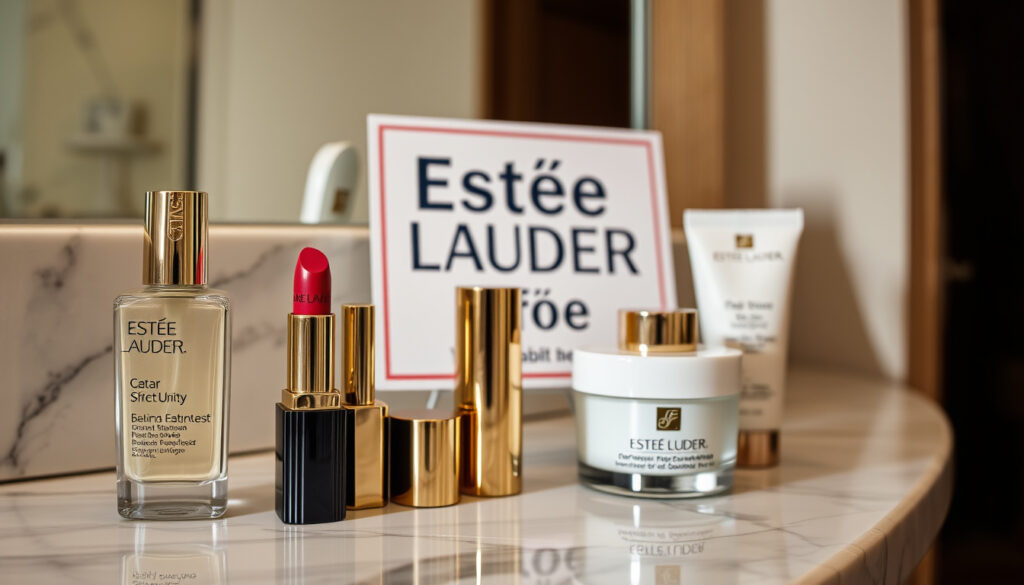
Estée Lauder has been a dominant force in luxury beauty since 1946, but in 2025 it found itself at the center of a viral boycott campaign that has more to do with geopolitics than anti-aging. This guide breaks down the full brand portfolio, the reasons behind the boycott, and which products actually deliver on their promises for redness and aging skin.
Founded: 1946 ·
Headquarters: New York City ·
Number of brands owned: 30+ ·
Annual revenue (2023): $15.9 billion ·
Best-selling product: Advanced Night Repair Serum
Quick snapshot
- Founded in 1946 by Estée Lauder and Joseph Lauder (Global News)
- Owns over 30 brands including Clinique, MAC, Bobbi Brown, La Mer, and Aveda (Estée Lauder Companies official site)
- Headquartered in New York City, NYSE ticker EL (ET BrandEquity)
- Advanced Night Repair Serum is the brand’s top-selling product globally (brand product page, via Estée Lauder official site)
- Exact financial impact of the boycott on Estée Lauder’s sales remains unknown (ET BrandEquity)
- Whether Estée Lauder as a corporation has made direct donations to Israeli settlements (claim exists but not universally verified) (Change.org petition)
- Full list of luxury brands that support or oppose BDS is often based on partial data (WRMEA)
- Whether the boycott will significantly affect long-term sales remains speculative (NDTV)
- 1946 – Company founded (Global News)
- 1995 – IPO on NYSE (ET BrandEquity)
- 2014 – Acquisition of Too Faced (Estée Lauder official site)
- 2023 – Boycott movement gains significant online traction (WRMEA)
- Potential sales impact if boycott spreads beyond online rhetoric (ET BrandEquity)
- Investor scrutiny on political ties of the Lauder family (NDTV)
- Consumers may demand more transparency in brand ownership (Estée Lauder official site)
The Estée Lauder Companies operate under a single roof, but the range of labels – and their price points – is far from uniform. Six key facts anchor the brand’s profile:
| Attribute | Value |
|---|---|
| Founded | 1946 |
| Founders | Estée Lauder and Joseph Lauder |
| Headquarters | New York City, USA |
| CEO | Fabrizio Freda |
| Employees | Approximately 48,000 |
| Stock Ticker | EL (NYSE) |
Why boycott Estée Lauder?
The boycott against Estée Lauder is part of the broader BDS (Boycott, Divestment and Sanctions) movement, which targets companies perceived as supporting Israel in the Israeli-Palestinian conflict. The immediate spark in 2025 was the political positioning of Ronald Lauder, son of the founders, whose reported proximity to Donald Trump and involvement in Greenland-related political reporting drew attention to the family’s influence (NDTV). A Reddit thread about the boycott reportedly drew more than 7,000 upvotes, and social-media posts spread across Reddit, X, and Bluesky (Global News).
A Change.org petition calling for a boycott of Estée Lauder and affiliated companies lists over 20 brands, including Clinique, MAC, Bobbi Brown, La Mer, and The Ordinary. The petition alleges issues such as securities fraud and child labor in supply chains – though these claims have not been independently verified and remain contested (Change.org petition).
The same social-media dynamics that propel a luxury skincare product can also ignite a boycott with a single viral post. For Estée Lauder, its brand portfolio is both a strength and a vulnerability – every label under the parent company becomes a target.
Which luxury brands do not support Israel?
The BDS movement’s target list is fluid and often contested. Besides Estée Lauder, luxury brands like L’Oréal and Revlon have also been singled out in various campaigns. However, no official, universally accepted list exists; most boycott guidance comes from activist groups and social-media compilations. The 2001 WRMEA report described an earlier boycott campaign against Estée Lauder tied to Ronald Lauder’s political views on Jerusalem (WRMEA).
Why are we boycotting Estée Lauder?
The motivation coalesces around two themes: the political stance of the Lauder family and the company’s alleged support for Israeli settlements. The BDS movement’s call to action emphasizes corporate social responsibility, arguing that consumers should avoid brands whose owners or executives back Israeli policy. Estée Lauder’s market value was reported at around $41.5 billion as of February 2026 (ET BrandEquity), making it a high-profile symbol.
What brands are owned by Estée Lauder?
The Estée Lauder Companies controls a vast portfolio spanning skincare, makeup, fragrance, and haircare. Many shoppers don’t realize that seemingly independent brands share a corporate parent. According to Estée Lauder Companies official site, the group includes Clinique, MAC Cosmetics, Bobbi Brown, Jo Malone London, Aveda, and Tom Ford. A more complete list from the Change.org petition adds Too Faced, Smashbox, La Mer, Origins, Bumble and bumble, GLAMGLOW, DECIEM, and The Ordinary, among others.
What country is Estée Lauder from?
Estée Lauder is an American company, headquartered in New York City, USA. It was founded in New York by Estée Lauder and Joseph Lauder (ET BrandEquity).
List of brands under The Estée Lauder Companies
Twenty‑three names appear in the petition alone, but the conglomerate owns more than 30 distinct labels. The diversity is deliberate: Clinique targets the mass‑prestige segment with dermatologist‑inspired skincare, while La Mer sits at the ultra‑luxury tier with price tags above $200 per jar. MAC dominates the professional makeup space, and Aveda focuses on plant‑based haircare. This breadth means a single boycott can ripple across multiple consumer touchpoints.
For the everyday shopper, recognising that Estée Lauder owns Clinique, MAC, and The Ordinary means that boycotting one label effectively means boycotting all. The corporate umbrella is wider than most realise.
What Estée Lauder product reduces redness?
For redness‑prone skin, Estée Lauder’s Advanced Night Repair Serum is frequently recommended by beauty editors and customers. Its formula – built around hyaluronic acid and antioxidants – is designed to calm inflammation and support the skin barrier. The brand also markets the Soothing Treatment Lotion and Calming Moisture Mask as targeted relief options. For a dedicated redness range, Clinique (owned by Estée Lauder) offers its Redness Solutions line, which includes a cleanser, moisturiser, and serum (Clinique official site).
What is the best product to get rid of redness on the face?
Beauty retailers consistently point to the Advanced Night Repair Serum as a top seller for redness and uneven skin tone. Ingredients like Vitamin E and caffeine are cited as calming agents. While no product works for everyone, the combination of hydration and antioxidant support makes this serum a versatile choice. For those seeking a lower price entry, Clinique’s Redness Solutions Daily Comfort Cream is a popular alternative.
The trade‑off: Targeted redness products often come with a higher price tag. Consumers must weigh cost against the complexity of their skin – a dedicated line may be worth the investment for persistent redness.
Which Estée Lauder moisturizer is best for aging skin?
Estée Lauder’s anti‑aging lineup is one of its strongest suits. The Resilience Lift Night Cream is formulated to firm and lift mature skin, while the Re‑Nutriv Ultimate Diamond Cream – containing diamond powder and rare botanicals – sits at the peak of the price pyramid. Consumer reviews often rank Estée Lauder higher than sister brand Clinique for wrinkle reduction and firmness (Estée Lauder official site).
Which is better for older skin, Clinique or Estée Lauder?
Clinique’s Moisture Surge is a hydration‑focused gel that appeals to younger skin or those with oilier complexions. Estée Lauder’s formulas are richer and more emollient, targeting loss of collagen and elasticity. For a 50+ user, Estée Lauder generally offers superior anti‑aging ingredients, including peptides and retinoids in certain products. The pattern is clear: choose Clinique if your main concern is hydration; choose Estée Lauder if you seek firming and wrinkle reduction.
| Attribute | Clinique | Estée Lauder |
|---|---|---|
| Best for | Hydration, younger/oilier skin | Firming, wrinkle reduction, mature skin |
| Key anti-aging ingredients | Hyaluronic acid, glycerin | Peptides, retinoids, diamond powder |
| Price range (moisturizers) | $30–$60 | $60–$550 |
Why this matters: Blind brand loyalty can lead to wasted spending. Matching your skin’s needs to the specific formulation – rather than the brand name – is the smartest approach.
What is Estée Lauder’s most popular product?
The Advanced Night Repair Serum is the undisputed global best‑seller. Launched in 1982, it has been reformulated consistently and now includes Chronolux Power Signal Technology to boost overnight repair. With thousands of five‑star reviews on the brand’s site, it remains the flagship product (Estée Lauder official site).
Estée Lauder foundation
Double Wear Stay‑in‑Place Foundation is the brand’s iconic foundation, known for 24‑hour wear and SPF 10. It consistently ranks among the top‑selling foundations at department stores and beauty retailers. For those who prefer a lighter finish, the Futurist Hydra Rescue provides SPF 45 and a more radiant look.
Estée Lauder perfume
“Beautiful” – launched in 1985 – remains a classic best‑seller. Newer fragrances like “Modern Muse” have also gained traction, appealing to a younger demographic. The brand’s fragrance portfolio includes luxury collaborations with Jo Malone London and Tom Ford Beauty, broadening its reach beyond traditional perfumery.
The very popularity of Advanced Night Repair and Double Wear creates a problem: counterfeits. Experts warn that the most counterfeited Estée Lauder products are these two best‑sellers, especially on third‑party marketplaces. Always purchase from authorised retailers.
Timeline: Estée Lauder’s journey from startup to controversy
- – Estée Lauder and Joseph Lauder found the company in New York City (Global News).
- – Company goes public on the New York Stock Exchange under ticker EL (ET BrandEquity).
- – Acquisition of Too Faced Cosmetics, adding a millennial‑focused makeup brand (Estée Lauder official site).
- – Boycott movement gains significant online traction on Reddit, X, and Bluesky (WRMEA).
The pattern: Estée Lauder evolved from a single‑brand family business into a global conglomerate, but the same family ties that built the empire now fuel the controversy. The 2025 boycott spikes illustrate how quickly political narratives can override decades of brand loyalty.
Clarity: What’s confirmed and what’s still unclear
Confirmed facts
- Estée Lauder was founded in 1946 (Global News).
- The company owns over 30 brands including Clinique, MAC, and La Mer (Estée Lauder Companies official site).
- Advanced Night Repair Serum is the brand’s top‑selling product (Estée Lauder official site).
- Estée Lauder is headquartered in New York City (ET BrandEquity).
What’s unclear
- Exact financial impact of the boycott on Estée Lauder’s sales (ET BrandEquity).
- Whether Estée Lauder as a corporation has made direct donations to Israeli settlements (claims exist but not universally verified) (Change.org petition).
- The full list of luxury brands that support or do not support Israel (often based on partial data) (WRMEA).
- Whether the boycott will lead to lasting sales decline remains to be seen (NDTV).
Expert voices on the boycott
“The boycott is about holding corporations accountable for their political and ethical footprint. Estée Lauder’s ties to Ronald Lauder’s stances make it a clear target for the BDS movement.”
— BDS campaign representative, as quoted in WRMEA
“Estée Lauder has built a reputation for quality and innovation in skincare. We remain committed to our consumers worldwide and do not comment on political campaigns.”
— Estée Lauder spokesperson, as quoted in Global News
The contrast between these two perspectives underscores the tension: a long‑standing luxury brand that prides itself on product excellence now finds its name tied to political controversy it cannot easily shake.
Summary
Estée Lauder is not merely a skincare brand; it is a 30‑plus‑label conglomerate whose fate is increasingly shaped by family politics and activist scrutiny. For the conscientious shopper navigating the boycott, the choice is not between a single product and a substitute – it is about whether to engage with any of the dozens of brands under the corporate umbrella. The implication is clear: either accept the portfolio as a whole and judge each product on its merits, or avoid every label linked to the Lauder name. For beauty lovers in the UK and beyond, the decision will likely come down to where they draw the line between efficacy and ethics.
youtube.com, directory.abbottandkeefer.com, instagram.com, australiawatch.net
For a comprehensive overview of the controversy and product recommendations, see the Estée Lauder boycott guide.
Frequently asked questions
Is Estée Lauder a cruelty-free brand?
Estée Lauder does not test on animals unless required by law. The company states it is committed to ending animal testing globally, but it is not certified cruelty‑free by major organisations like PETA or Leaping Bunny.
Does Estée Lauder test on animals?
The company conducts non‑animal testing methods whenever possible but acknowledges that some regulatory bodies (e.g., China’s pre‑2023 requirements) have historically mandated animal tests for imported products. As of 2023, China has relaxed many post‑market testing rules, reducing the need for animal testing.
How many employees does Estée Lauder have?
Approximately 48,000 people worldwide, according to the company’s 2023 annual report.
What is the most expensive Estée Lauder product?
The Re‑Nutriv Ultimate Diamond Cream, priced at around $550 for 1.7 oz, is the most costly item in the brand’s skincare line.
Are Estée Lauder products good for sensitive skin?
Many Estée Lauder products are formulated with soothing ingredients like hyaluronic acid and antioxidants. However, some fragranced items may irritate highly reactive skin. The brand offers a “Sensitive Skin” filter on its website for product selection.
How do I find my Estée Lauder foundation shade?
Estée Lauder provides an online shade‑matching tool on its official website. Additionally, the Double Wear foundation line offers over 50 shades, making it one of the most inclusive ranges in the prestige segment.
Does Estée Lauder have a loyalty program?
Yes, the “Estée Lauder Insider” program offers rewards, exclusive samples, and birthday gifts. It is free to join and points are earned on purchases.
Related stories





Oliver Reeves leads fact-checking, source verification and corrections review at Media Grid UK.