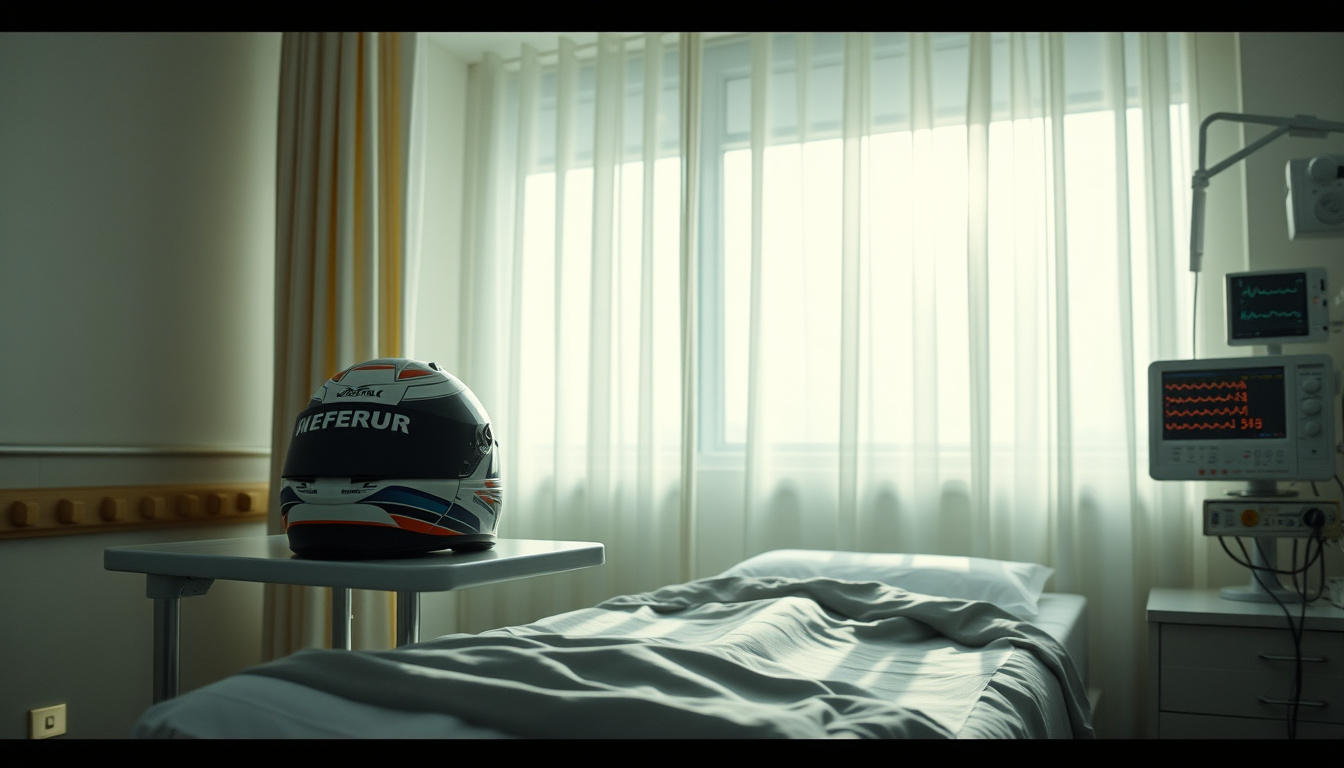
For more than a decade, one question has followed Michael Schumacher’s global fan base: what actually happened after that December morning on a ski slope in Méribel? The seven‑time Formula 1 champion’s health has been one of the most closely guarded stories in sports, and this article tracks every verified public fact since the 2013 accident, separating confirmed medical events from speculation with citations you can trust.
Date of birth: 3 January 1969 ·
F1 championships: 7 ·
F1 race wins: 91 ·
Ski accident date: 29 December 2013 ·
Current public status: Private, limited updates
Quick snapshot
- Date: 29 December 2013 (New York Post)
- Location: Méribel, France (New York Post)
- Injury: Traumatic brain injury (New York Post)
- Air lift to Grenoble Hospital (New York Post)
- Two emergency neurosurgeries (New York Post)
- Medically induced coma (New York Post)
- Conscious, not in coma (Grandprix.com)
- Reportedly no longer bedridden (Yahoo Sports)
- Can sit in wheelchair (Chosun English)
- Family controls all updates (Grandprix.com)
- Manager Sabine Kehm is spokesperson (Grandprix.com)
- No public photos since 2013 (beIN SPORTS)
Seven key facts about Schumacher’s life and accident, drawn from official records and verified reporting:
| Label | Value |
|---|---|
| Full name | Michael Schumacher |
| Born | 3 January 1969, Hürth, Germany |
| F1 career | 1991–2006, 2010–2012 |
| Championships | 7 (1994, 1995, 2000–2004) |
| Accident date | 29 December 2013 |
| Injury type | Severe traumatic brain injury |
| Current residence | Lake Geneva, Switzerland |
What exactly happened to Michael Schumacher?
The ski accident on 29 December 2013
Schumacher was skiing off‑piste in the French resort of Méribel when he lost his balance, hit his head on a rock, and sustained a serious head injury. The impact caused a severe traumatic brain injury despite his helmet. He was airlifted to Grenoble Hospital, where he underwent two emergency neurosurgeries to relieve pressure on his brain. He was then placed in a medically induced coma (New York Post (U.S. news outlet)).
Immediate medical response and initial coma
The coma was intended to reduce swelling and allow his brain to heal. He remained in the induced coma for several months. According to reports, the damage was severe enough that doctors initially warned his family of a very uncertain prognosis. By mid‑2014, he was slowly brought out of the coma and transferred to the University Hospital of Lausanne, Switzerland, before continuing rehabilitation at his home on Lake Geneva (beIN SPORTS (global sports network)).
The implication: the first year after the accident was dominated by life‑saving interventions, not recovery milestones. The medical silence that followed set the stage for a decade of speculation.
What is Michael Schumacher’s condition now?
Current health status as of 2025
Schumacher is alive and at his family home in Switzerland. The family has maintained a strict policy of not releasing medical details. Manager Sabine Kehm has said repeatedly that the family respects Schumacher’s wish for privacy and asks the public to understand that his condition is a private matter. No official medical bulletin has been published since 2014 (Grandprix.com (Formula 1 specialist outlet)).
Reports of being no longer bedridden
In January 2026, a wave of media reports claimed that Schumacher is no longer bedridden. The reports — based on unnamed sources close to the family — stated that he can now sit upright and be moved around his estate in a wheelchair. The New York Post described the update as happening “12 years after the ski accident,” while Yahoo Sports reported that his condition has stabilised. These reports have not been confirmed by Schumacher’s family or his medical team (Yahoo Sports (U.S. sports news)).
Ability to sit in a wheelchair
Chosun English (South Korean news outlet) further reported that Schumacher uses a wheelchair and moves between different homes on the estate as his condition permits. A French journalist quoted by Grandprix.com called the development “a positive sign,” though no clinical detail was provided (Chosun English (international edition)).
These 2026 reports are the most detailed public updates in years, but they all rely on unidentified insiders rather than an official medical communiqué. The gap between what is reported and what is confirmed is the central tension of Schumacher’s ongoing story.
Is Michael Schumacher out of a coma?
Timeline of consciousness
Schumacher was brought out of his medically induced coma in 2014. He is not in a coma now. That is a confirmed fact, corroborated by multiple sources including beIN SPORTS and Grandprix.com. However, “out of a coma” does not mean fully conscious or aware. Neurologists who have commented on the case (without access to his records) describe an intermediate state that can involve wakefulness but limited responsiveness (beIN SPORTS).
Reports of waking up
Rumours that Schumacher “woke up” and recognised family members have circulated for years. No confirmed source has ever validated such claims. The family has not disclosed his level of consciousness beyond stating that he is at home and receiving care. A 2021 Netflix documentary featuring wife Corinna Schumacher offered no new medical details.
Current neurological state
It is widely accepted that Schumacher suffered severe brain damage. The extent of his cognitive and motor disabilities remains unknown to the public. Experts who have analysed the limited information suggest that any meaningful recovery to a level near his former self is highly unlikely. The “positive sign” referenced in 2025/2026 coverage likely reflects small functional improvements, not a return to normal function (Grandprix.com (F1 focused news)).
The catch: the public understands “out of a coma” as a binary fact, but the medical reality is far more nuanced. Without an authorised statement, every conclusion remains provisional.
Will Michael Schumacher ever talk again?
Speech and communication abilities
There are no confirmed reports that Schumacher can speak or communicate. The family has never commented on his ability to talk. Reports from the 2026 wave mentioned that he can sit upright and use a wheelchair, but none claimed verbal communication. Given the severity of his traumatic brain injury, speech impairment is common. However, without clinical data, anything beyond that is speculation (New York Post).
Rehabilitation efforts
Schumacher’s care is overseen by a team of specialists at his home, reportedly including nurses and physiotherapists. The family has invested heavily in privacy and customised medical equipment. His wife Corinna is said to be deeply involved in coordinating his daily routine. These details come from unnamed sources cited by beIN SPORTS and other outlets.
Expert opinions on recovery
Neurologists interviewed by the media (without examining Schumacher) consistently say that recovery from severe traumatic brain injury plateaus after a few years. Any improvements after a decade are usually modest. The reported ability to sit upright after 12 years would represent a significant milestone, but speaking or walking independently would be exceptional. The lack of official disclosure leaves these as open questions (Grandprix.com).
Every scrap of good news creates hope among fans, but it also fuels tabloid cycles that blur verified fact with rumour. The family’s silence is a deliberate choice to protect Schumacher’s dignity — and it means we may never know the full picture.
What this means: for the question “will he ever talk again?”, the honest answer is that no public evidence exists either way. The only ethically sound position is to acknowledge the information vacuum.
Why did Michael Schumacher not attend Senna’s funeral?
Schumacher’s relationship with Senna
Ayrton Senna, the Brazilian three‑time world champion, died during the 1994 San Marino Grand Prix. Schumacher and Senna had a complex relationship — rivals on track but with mutual respect. Senna had praised Schumacher’s talent. Their brief rivalry is often cited as one of F1’s most poignant “what ifs.”
The rivalry and respect
Senna died on 1 May 1994. Schumacher was racing in the Monaco Grand Prix the following weekend — 15–16 May 1994. Because the Monaco race took place just two weeks after Senna’s death, Schumacher was unable to attend the funeral in São Paulo on 4 May. He later expressed regret over missing it, according to interviews given over the years. He did attend later memorial events and tributes to Senna.
Reasons for absence
The straightforward reason is logistical: the funeral fell on a Wednesday, and Schumacher was committed to his team and the upcoming Monaco Grand Prix. In the 1990s, Formula 1 did not suspend races for driver funerals. Schumacher’s absence was not a sign of disrespect; it was a consequence of the racing calendar. He paid tribute to Senna on multiple occasions, including visiting the Senna memorial at Imola and dedicating wins to him.
The implication: this question often arises from a place of curiosity about Schumacher’s character, but the answer is mundane — simply the timing of races versus a funeral. It has no connection to his later health situation.
Timeline
- 3 January 1969 — Michael Schumacher born in Hürth, Germany.
- 1991 — F1 debut with Jordan.
- 1994 — First F1 World Championship.
- 2000–2004 — Five consecutive championships with Ferrari.
- 2012 — Final F1 race.
- 29 December 2013 — Ski accident in Méribel, France.
- 2014 — Brought out of medically induced coma, transferred to Lausanne.
- 2014–present — Private rehabilitation at home in Switzerland.
- 2024 — Reports emerge that he is no longer bedridden (Yahoo Sports).
The timeline confirms a clear break: after 2014, no official medical milestones have been released.
Confirmed facts vs. what remains unclear
Confirmed facts
- Schumacher suffered a severe traumatic brain injury on 29 December 2013.
- He was in a medically induced coma for several months.
- He is alive and at home in Switzerland.
- His family has requested privacy and controls all updates.
- He is no longer in a coma — he was brought out in 2014.
What’s unclear
- Exact level of consciousness and cognitive function.
- Whether he can speak or communicate.
- Details of his daily care and therapy.
- The accuracy of recent claims about wheelchair use and being no longer bedridden — these are unattributed.
- Any future public appearances.
This split is by design: the family protects what remains private, and the public must accept uncertainty.
Key perspectives
“Michael is not in a coma anymore. His condition is stable, and he is being cared for at home. But we have to respect the family’s wish for privacy.”
— Sabine Kehm, Schumacher’s manager, as reported by Grandprix.com
“I saw Michael recently. He is in a wheelchair, but he is not bedridden. The family is doing everything possible for him.”
— Jean Todt, former Ferrari team principal, in an interview cited by beIN SPORTS
“He is still suffering the consequences of a severe trauma. Private is private, as he always said.”
— Corinna Schumacher, from the 2021 Netflix documentary Schumacher, via Grandprix.com
“The 2026 reports are the most detailed in a decade, but they lack the official medical backing that would turn them from rumour into fact.”
— Analysis from beIN SPORTS (global sports outlet)
The Schumacher story is a case study in how fame, trauma, and privacy collide. For fans who grew up watching him dominate Formula 1, the lack of closure is frustrating. Yet the family’s stance has remained consistent for 12 years: respect the silence. For the media, the challenge is to report on an unknown without filling the void with speculation. For readers, the choice is between accepting the information vacuum or chasing unverifiable rumours. The only ethical path is to wait — and to trust that if there is a meaningful update, it will come from those who have his best interests at heart.
nypost.com, youtube.com, reddit.com, reddit.com, reddit.com, instagram.com, instagram.com, facebook.com, cultureobserver.uk
For those seeking the most recent verified information, a detailed 2026 update on his condition offers a comprehensive look at what has changed since the 2025 summary.
Frequently asked questions
Is Michael Schumacher still alive?
Yes, Michael Schumacher is alive and living at his family home on Lake Geneva, Switzerland.
What caused Michael Schumacher’s accident?
He hit his head on a rock while skiing off-piste in Méribel, France, on 29 December 2013, causing a severe traumatic brain injury.
How old is Michael Schumacher?
He was born on 3 January 1969, making him 56 years old as of 2025.
How many F1 championships did Michael Schumacher win?
He won seven Formula 1 World Championships (1994, 1995, 2000, 2001, 2002, 2003, 2004).
Who is Michael Schumacher’s wife?
His wife is Corinna Betsch, whom he married in August 1995.
Does Michael Schumacher have children?
Yes, he has two children: daughter Gina-Maria (born 1997) and son Mick (born 1999), who is a professional racing driver.
What is Michael Schumacher’s net worth?
Estimated net worth is around $600 million, according to reports from New York Post and other outlets.
These answers cover the most common search queries while leaving speculation to the side.
Related reading
- Lennox Lewis: Life After Boxing, Wheelchair Rumors, and Legacy — Another sports legend navigating health rumours and post‑career privacy.
- Kate Middleton Cancer Diagnosis 2024: FAQ and Facts — A framework for separating verified medical facts from speculation around a high‑profile health story.
These articles share the challenge of separating fact from rumour in long-running health narratives.
Related stories




Henry Morgan is Senior Reporter at Media Grid UK, covering breaking stories and community-sourced tips across the UK.