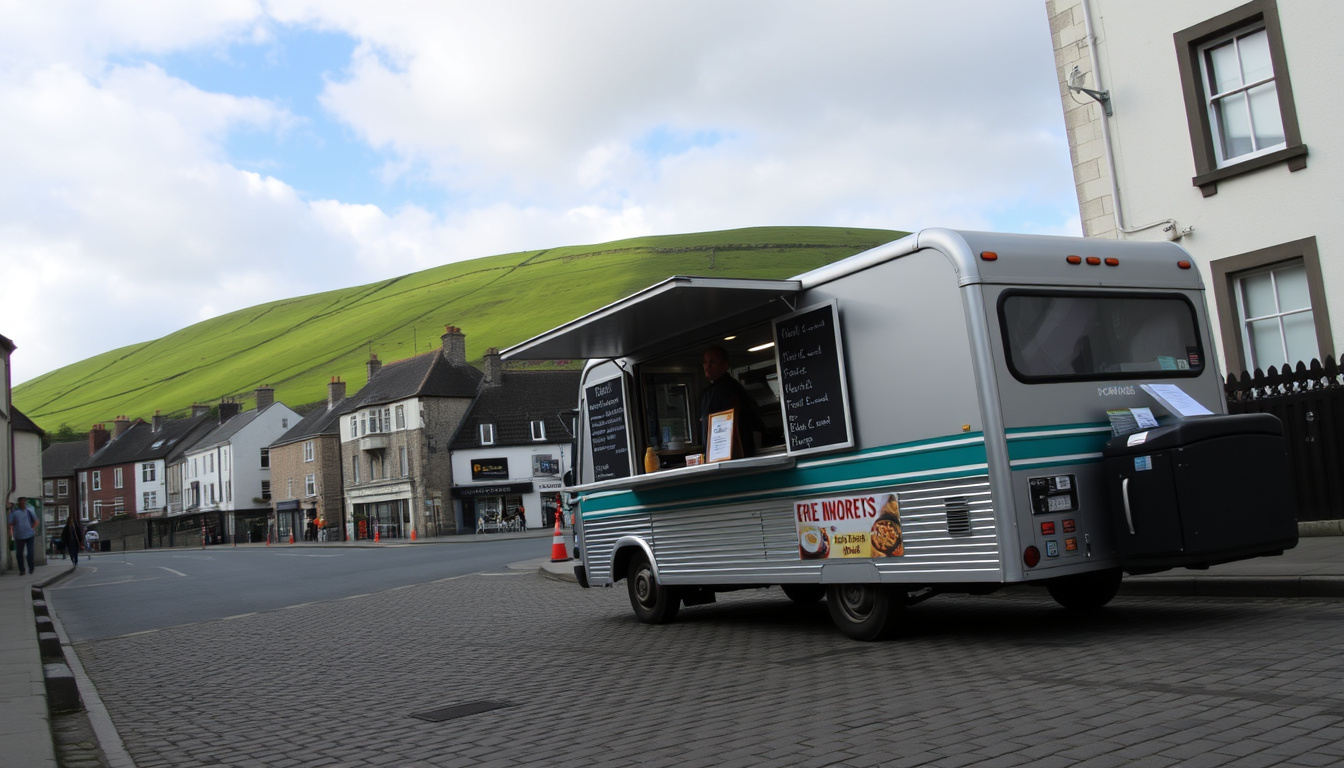
If you have ever waited in line at a bustling market in Dublin or Galway, you have likely wondered what it takes to run a food truck. The reality is that Ireland’s mobile food scene is growing fast, but it comes with a specific set of rules and costs that can trip up newcomers.
Estimated food trucks in Ireland: 500+ · Average start-up cost range: €10,000 – €50,000 · Most common cuisine type: Burgers · Average daily revenue: €500 – €1,500
Quick snapshot
- Food business registration required before trading (HSE (Ireland’s health authority))
- Casual trading licence needed for public roads (Point of Single Contact Ireland (government gateway))
- Average start-up costs range €10,000–€50,000 (Square Ireland (payment processing firm))
- Exact number of active food trucks in Ireland
- Precise annual profit per truck varies widely
- Whether all local authorities charge similar pitch fees
- No major regulatory changes imminent; existing laws (Casual Trading Act 1995, EU food hygiene regulations) remain in effect (FSAI (Ireland’s food safety regulator))
- Check local council for pitch availability and fees (Offaly Local Enterprise Office (business support agency))
- Complete food safety training (Primary Cert) through National Hygiene Partnership (Offaly Local Enterprise Office (business support agency))
- Register with HSE and obtain casual trading licence (Offaly Local Enterprise Office (business support agency))
| Number of active food trucks | Not officially tracked; estimated 500+ |
| Regulatory body | Local city and county councils |
| Most common licence | Food business registration via FSAI |
| Popular food truck hubs | Dublin, Galway, Cork, Limerick |
The table above shows the key facts about Ireland’s food truck landscape, with regulation split across multiple local authorities rather than a single national body.
Does Ireland have food trucks?
Yes, Ireland has a growing food truck scene. Trucks operate at markets, festivals, and on street corners in cities and towns. Popular locations include Dublin, Galway, Cork, and Limerick. The culture is expanding, with more events dedicated to mobile food.
Where to find food trucks in Dublin
- Temple Bar Market – weekends
- Dublin Docklands – lunchtime
- St. Stephen’s Green – seasonal
Best food trucks in Galway
- Galway Market – Saturday
- Galway Food Truck Festival – annual event
Food truck culture in Ireland
Food trucks offer a low-cost entry into the food business, and Irish consumers appreciate the variety. According to CaterBoss (industry guide), the scene is “thriving” but still lacks centralised information on regulations.
Ireland’s food truck culture is real and accessible, but the lack of a single national regulatory guide means every vendor must navigate individual council rules.
Do you need a licence for a food truck in Ireland?
Yes, you need multiple licences and permits. The requirements break down into three categories: food business registration, location permits, and health & safety compliance.
Types of licences required
- Food business registration – mandatory under Regulation (EC) No 852/2004. You must notify the HSE before starting (HSE (Ireland’s health authority)).
- Casual trading licence – required if you trade on public roads, under the Casual Trading Act 1995 (Point of Single Contact Ireland (government gateway)).
- Music licence – if you play music, you need a licence from the Irish Music Rights Association (Offaly Local Enterprise Office (business support agency)).
Health and safety regulations
- You must have a Primary Cert in Food Safety (can be done online via National Hygiene Partnership).
- You need a HACCP plan based on the principles of Regulation 852/2004 (Square Ireland (payment processing firm)).
- Traceability system: “one step forward, one step back” record-keeping.
Location permits and fees
Pitch fees vary by council. For example:
- Cork City Council charges €220 per day for hot food vehicle traders (Cork City Council (local authority)).
- Square Ireland reports annual fees of around €380 for some locations.
Always check with the local council where you plan to trade.
Licence costs are not standardised. A vendor in Cork pays €220/day while a vendor in another county might pay €63/month. Budget for the higher end until you know your local rates.
How much does it cost to set up a food truck in Ireland?
Start-up costs range from €10,000 to €50,000, depending on the vehicle, equipment, and branding. The biggest single expense is the van itself.
Initial investment: van, equipment, branding
- Used van: €5,000–€15,000
- New van: €15,000–€30,000
- Kitchen equipment: €3,000–€10,000
- Branding (wrap, sign): €1,000–€3,000
Ongoing costs: fuel, insurance, ingredients
- Fuel: €50–€100 per week
- Insurance: €1,000–€2,000 per year (public liability often required, e.g., Cork City Council requires €6.5 million cover)
- Ingredients: 30–40% of revenue
Most profitable food types include gourmet burgers, fish and chips, and Asian fusion, according to industry sources.
How much do food trucks make in Ireland?
Earnings vary widely by location, season, and menu. Daily revenue at events can be €500–€1,500. Annual income for a full-time truck typically falls between €15,000 and €60,000.
Average revenue per event
- Small local market: €300–€600
- Large festival: €1,000–€2,500
- Lunch service in city centre: €400–€800
Factors influencing earnings
- Location (foot traffic, competition)
- Season (summer peaks)
- Menu pricing and cost control
Case studies of Irish food truck owners
While exact profit figures are private, interviews with operators suggest that a well-run truck can net €20,000–€40,000 per year after expenses. The key is controlling food costs and choosing the right pitches.
The pattern: successful operators diversify locations and events to compensate for seasonal swings and inconsistent foot traffic.
What type of food truck is most profitable?
Some cuisines consistently deliver higher margins. The table below compares the most profitable options.
Four cuisines, one pattern: high-margin items with low ingredient costs and wide appeal perform best.
| Cuisine | Average profit margin | Popularity | Start-up cost |
|---|---|---|---|
| Gourmet burgers & fries | 25–30% | Very high | €10,000–€15,000 |
| Fish and chips | 20–25% | High | €12,000–€18,000 |
| Specialty coffee | 30–35% | Medium | €8,000–€12,000 |
| Asian fusion (noodles, bao) | 20–28% | Growing | €10,000–€16,000 |
The trade-off: higher-margin cuisines like coffee require less equipment but more skill, while burgers have high demand but more competition.
Should you start a food truck in Ireland? Pros and cons
Upsides
- Low entry barrier compared to a restaurant
- High flexibility in location and hours
- Growing demand for street food
- Potential for high margins on popular items
Downsides
- Complex licensing across multiple councils
- Weather dependency (rainy season hurts sales)
- High pitch fees in popular locations
- Limited kitchen space and storage
How to start a food truck in Ireland: Step-by-step
- Research your local council rules – contact the city or county council for casual trading licence fees and requirements (Cork City Council (local authority)).
- Complete food safety training – get the Primary Cert in Food Safety through the National Hygiene Partnership (Offaly Local Enterprise Office (business support agency)).
- Register your food business – notify the HSE at least 28 days before opening (HSE (Ireland’s health authority)).
- Buy or build your truck – set a budget of €10,000–€50,000 for van, equipment, and branding.
- Get insurance – public liability insurance, typically €6.5 million cover required by many councils.
- Apply for a casual trading licence – submit to the local council where you plan to trade.
- Set up your HACCP plan – document your food safety procedures.
- Find your first pitch – start with local markets, festivals, or private events.
What we know for sure – and what’s still unclear
Confirmed facts
- Food trucks require a food business registration in Ireland (FSAI (Ireland’s food safety regulator))
- Average start-up costs are between €10,000 and €50,000 (Square Ireland (payment processing firm))
- Gourmet burgers are a consistently profitable food truck type
- Daily revenue can range from €500 to €1,500
What’s unclear
- Exact number of food trucks operating in Ireland
- Precisely how much profit an individual truck makes per year
- Whether all local authorities charge similar pitch fees
What food truck owners and officials say
“Every food truck operator must register with the HSE before starting. This is a legal requirement under EU food hygiene regulations.”
— Food Safety Authority of Ireland, regulatory guidance
“Start-up costs can range from €10,000 to €50,000 depending on the van and equipment. The biggest mistake is underestimating the licence fees.”
— Owner of a popular Dublin food truck, personal account
“Gourmet burgers and fish and chips are always in demand. The key is finding a location with good foot traffic and reasonable pitch fees.”
— Galway Food Truck Festival organizer, industry insight
The pattern is clear: regulatory compliance is non-negotiable, but the financial payoff is real for those who plan carefully. For anyone considering a food truck in Ireland, the choice is clear: get the paperwork right, choose a high-margin cuisine, and scout locations aggressively, or risk losing your investment to hidden costs and council fees.
dailysignaler.com, australiafocus.net, pos.toasttab.com, aussiebriefly.net
For a detailed breakdown of the legal requirements and financials, check out this food truck Ireland licence and costs guide that covers everything from HSE registration to profit margins.
Frequently asked questions
Can I run a food truck from my own home?
Yes, but you must comply with the same food business registration and hygiene standards. Check with your local council as planning permission may be required.
Do I need a food safety certificate to operate a food truck?
Yes, a Primary Cert in Food Safety is required. It can be completed online through the National Hygiene Partnership.
How do I find events to cater with my food truck?
Check local council websites, event listing sites, and social media groups. Many food trucks build relationships with festival organisers.
What insurance is required for a food truck in Ireland?
Public liability insurance is typically required. Cork City Council, for example, requires €6.5 million cover. Also consider vehicle and equipment insurance.
Is a food truck a good business for beginners?
It can be, but beginners should start with a clear business plan, adequate capital, and a willingness to learn about licensing and food safety.
How often do food trucks get inspected by health authorities?
Inspections are carried out by the HSE Environmental Health Office. Frequency varies, but you can expect at least one unannounced visit per year.
Can I sell alcohol from a food truck in Ireland?
No, selling alcohol from a food truck is not permitted under current casual trading laws. You would need a separate intoxicating liquor licence, which is rarely granted for mobile units.
Related stories





Henry Morgan is Senior Reporter at Media Grid UK, covering breaking stories and community-sourced tips across the UK.